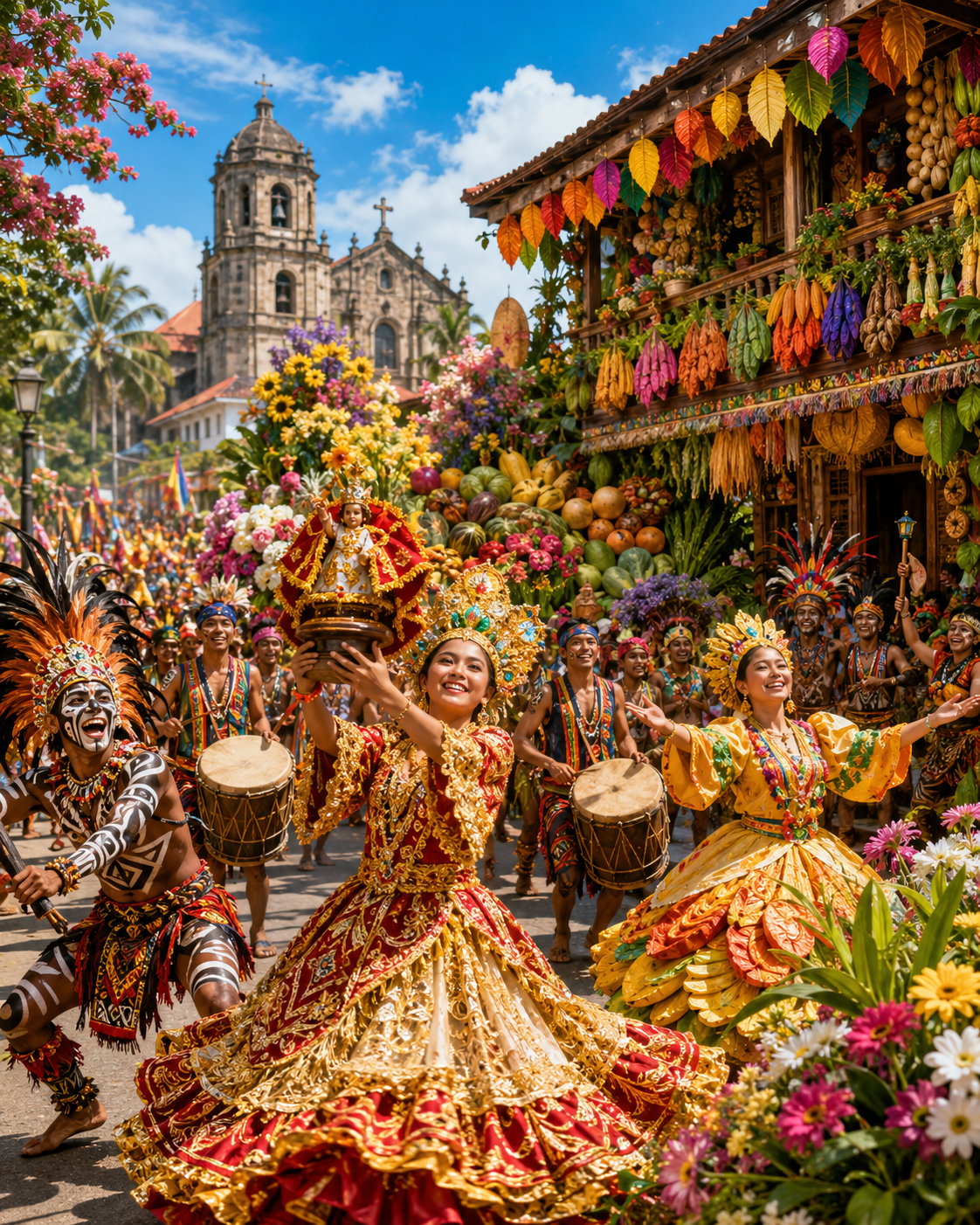
The Philippines is widely known for its colorful festivals, warm hospitality, and deep respect for tradition. Across its more than 7,000 islands, each province, city, and town has its own way of celebrating history, faith, harvest, community, and local identity. Filipino festivals are not merely public entertainment; they are living expressions of the country’s diverse cultural roots, shaped by indigenous beliefs, Spanish Catholic influence, Islamic heritage, Chinese trade connections, and modern creativity.
One of the most important features of Philippine festivals is their connection to religion. Many celebrations honor patron saints, reflecting the strong influence of Catholicism introduced during Spanish colonization. Sinulog Festival in Cebu, for example, is held in honor of the Santo Niño, or Child Jesus. Dancers move in a forward-and-backward rhythm that symbolizes the flow of Cebu’s river and the people’s devotion. Similarly, Ati-Atihan Festival in Aklan pays tribute to the Santo Niño while also remembering the indigenous Ati people. Participants paint their faces with black soot, wear tribal-inspired costumes, and dance through the streets to the sound of drums.
Agricultural festivals are also essential in Filipino culture because many communities depend on farming and fishing. The Pahiyas Festival in Lucban, Quezon, is one of the most visually impressive harvest celebrations. Homes are decorated with fruits, vegetables, rice grains, and colorful kiping, a leaf-shaped rice wafer. This tradition shows gratitude for a bountiful harvest and highlights the creativity of local residents. In Davao, the Kadayawan Festival celebrates nature’s abundance, indigenous culture, and the city’s multicultural identity. Flowers, fruits, tribal music, and street dancing all come together in a lively tribute to life and prosperity.
Some festivals focus on resilience and local history. MassKara Festival in Bacolod is famous for its smiling masks, bright costumes, and joyful street performances. It began during a difficult period in the city’s history, when economic hardship and tragedy affected the people. The festival became a symbol of hope, reminding Filipinos that joy can survive even in challenging times. Another meaningful celebration is Moriones Festival in Marinduque, where locals wear Roman soldier masks and reenact the story of Longinus during Holy Week.
Beyond festivals, everyday Filipino traditions also reveal the richness of local culture. Respect for elders is shown through “pagmamano,” a gesture where younger people take an elder’s hand and place it on their forehead. Strong family ties are reflected in gatherings, fiestas, and shared meals. The value of “bayanihan,” or communal unity, continues to influence Filipino society, especially during times of need.
Philippine festivals and traditions show that culture is not something kept only in museums. It is danced in the streets, cooked in family kitchens, sung in churches, displayed in costumes, and passed from one generation to another. Through every celebration, Filipinos preserve their history while proudly sharing their unique identity with the world.
