Data Centres as the New Anchor Demand
Malaysia’s data centre boom is no longer a peripheral story about foreign direct investment. It has become the single most powerful demand signal for renewable energy procurement in the country. In November 2026, Google announced plans to expand its clean energy procurement in Malaysia to 1 GW under the Corporate Renewable Energy Supply Scheme (CRESS), building on two 50 MW solar projects in Kedah. The company’s broader US$15 billion (RM60.96 billion) investment in Malaysia from 2027 to 2028 will fund data centre campuses, clean energy, water security, and workforce upskilling.
Google’s commitment is significant not only for its scale but for its structure. The company uses long-term power purchase agreements to provide the revenue certainty that developers need to finance new solar farms, explicitly linking its own electricity costs to new capacity addition rather than simply drawing from the existing grid.
The IOI–TNB–DayOne Triangle
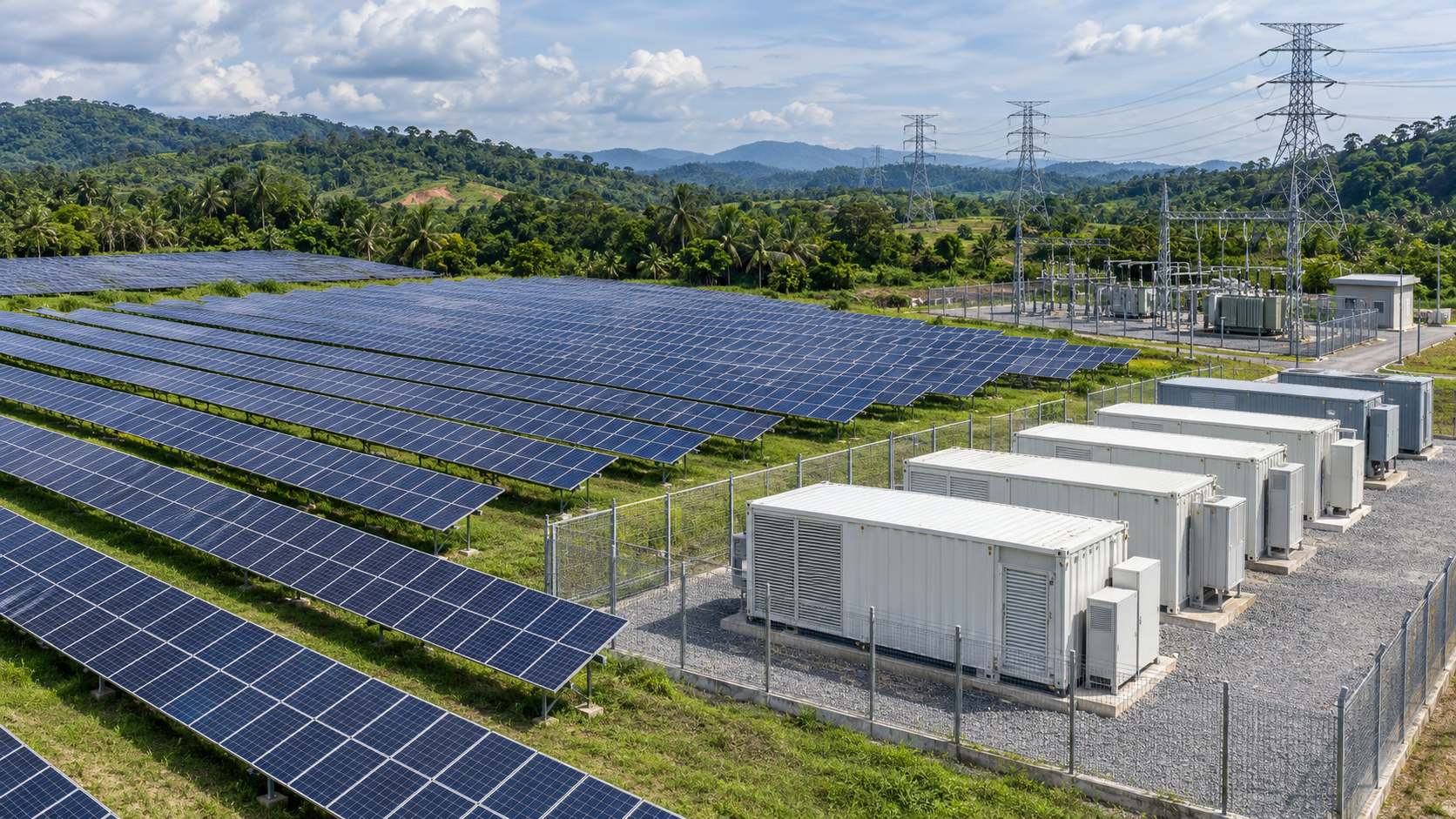
The most instructive transaction of 2026 is the three-way partnership between IOI Corporation, TNB Renewables, and DayOne Data Centres. Under the agreement signed in November 2026, IOI’s subsidiary holds 25 per cent of a project company developing 500 MWac of solar and a 250 MW/1,000 MWh battery system in Bahau, Negeri Sembilan. TNB Renewables holds 70 per cent, and a consortium of SMEs holds 5 per cent. DayOne will procure up to 500 MWac of renewable energy over 21 years.
This structure is a template for how Malaysia’s renewable market can align land (IOI’s 1,300-acre estate), utility balance-sheet strength (TNB), and hyperscale demand (DayOne). It also demonstrates that battery storage is becoming a standard component of corporate renewable deals, not an afterthought.
Green Building Certification and the Premium Segment
At the premium end of the data centre market, ZDATA Group is developing Malaysia’s first GreenRE Platinum-certified hyperscale data centre in Johor with an investment of approximately RM8 billion, with operations expected to commence by the end of March 2026. GreenRE Platinum certification requires demonstrable energy efficiency and renewable integration, creating a differentiated product for tenants with sustainability mandates.
The Grid Cost Question
The rapid growth of data centres has raised legitimate public concerns about electricity costs and grid capacity. Google’s Asia-Pacific clean energy head has argued that the company covers its own electricity costs and that its long-term offtake commitments bring new capacity onto the grid without shifting costs to households or businesses. Whether this holds true at scale depends on how transmission and substation upgrade costs are allocated—a regulatory question that Malaysia has not yet fully resolved.
What is clear is that data centre demand is accelerating the maturation of Malaysia’s renewable procurement market. Corporate buyers are no longer passive tariff-payers; they are active shapers of generation build-out.
