A Fall from Second Place and the Road Back
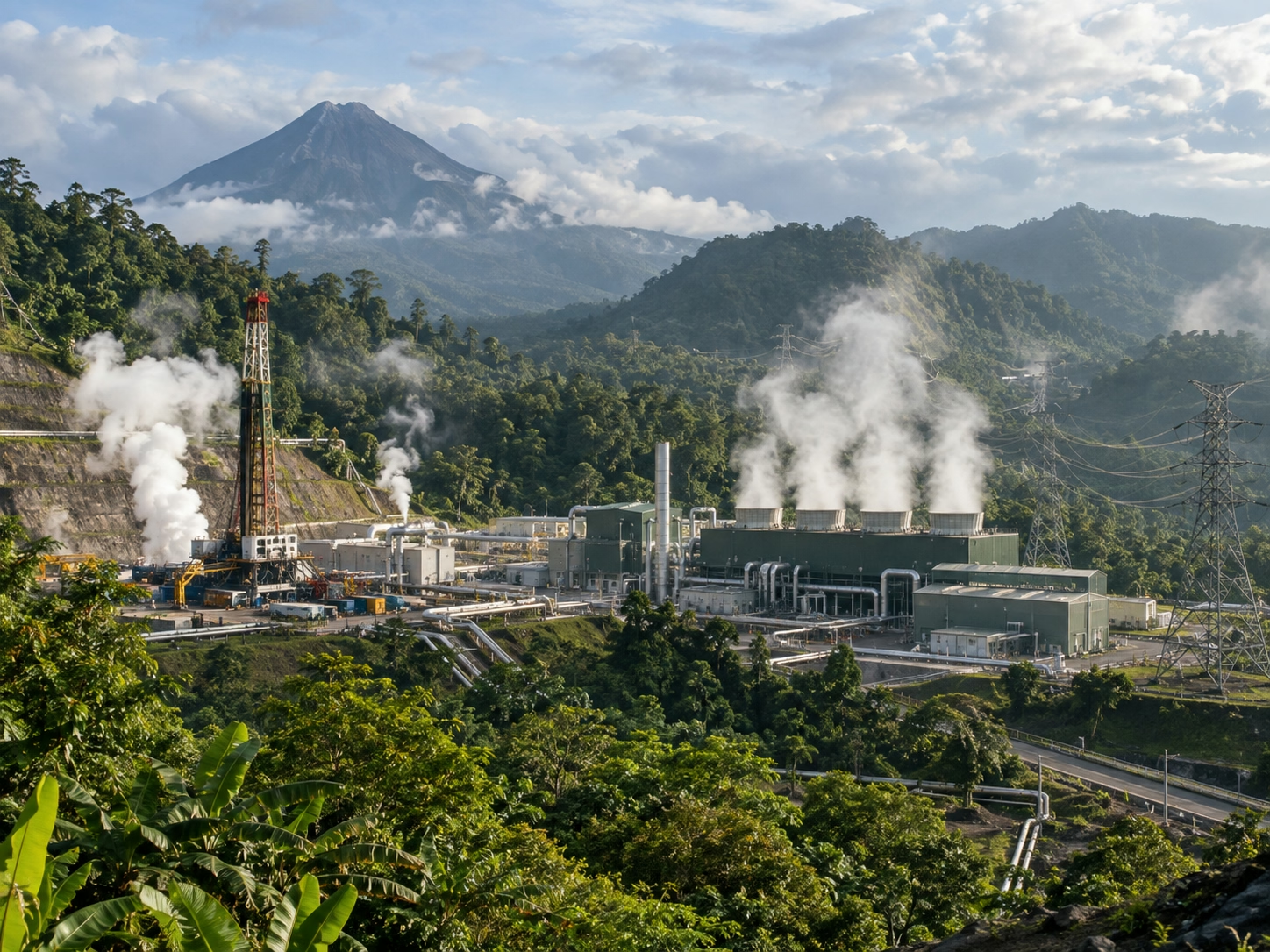
For decades, the Philippines stood as a global geothermal titan. Today, it ranks third, behind the United States and Indonesia, with around 2,057 MW of installed geothermal capacity accounting for roughly 6.4 percent of electricity generation in 2025. But the government has a plan to reclaim its former position—and it involves a PHP10.7 billion de-risking facility.
The Scale of Untapped Potential
Energy Secretary Sharon Garin has confirmed that the country has a potential 2,100 MW of geothermal energy still to be explored and developed. The Philippines also hosts the largest geothermal facility in Asia—the Unified Leyte Geothermal Power Plant on the boundary of Kananga, Leyte and Ormoc City.
How the De-Risking Facility Works
Shared Risk, Shared Reward
The Department of Energy and the Land Bank of the Philippines signed a memorandum of agreement in December 2025 for the USD170-million Philippine Geothermal Resource De-Risking Facility, financed through a sovereign loan from the Manila-based multilateral lender. The facility provides capital for geothermal exploration. Once an exploration project proves successful, the funding is treated as a loan; if it fails, it is considered a grant.
Timeline and Targets
Garin said the funding is adequate to boost domestic geothermal capacity by around 300 MW, with projects to be assessed first by the DOE. A public consultation is scheduled for October, with a call for proposals also set. Actual drilling implementation is expected to begin by 2028.
The Real-World Stakes: A Race Against Indonesia
DOE Chief Science Research Specialist Rainier Halcon offered a candid assessment: “If we finish the 300 megawatts additional installed capacity to be supported by the de-risking facility, hopefully, we’ll be at number two—as long as the Indonesian power plants are not online.”
The de-risking facility is projected to help priority projects reach their commercial date at least three years earlier. Garin noted that the current fund level is enough to increase geothermal’s share in the energy mix to the “ideal level” of 10 percent.
Why Geothermal Matters Beyond Megawatts
Unlike solar and wind, geothermal provides baseload power—consistent, round-the-clock generation that does not depend on weather conditions. For a country acutely vulnerable to typhoons and climate volatility, this reliability is not a luxury. It is strategic infrastructure.
The Philippines is not merely chasing a ranking. It is pursuing energy sovereignty through a resource that lies beneath its own soil. The question is not whether the resource exists, but whether the capital and regulatory speed can match the ambition.
