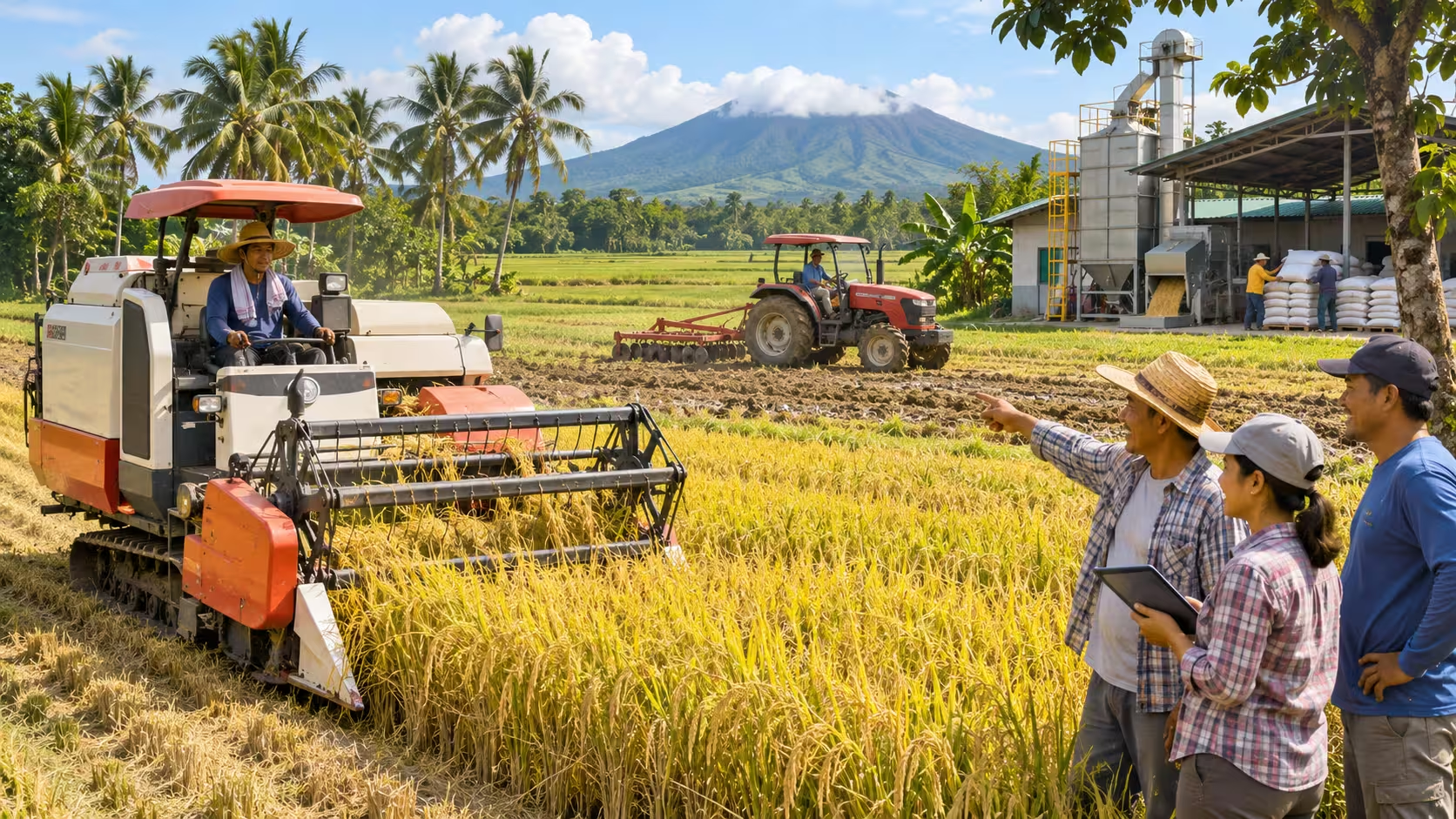
The Philippines opened a centralized agricultural data platform in 2026 that officials say could fundamentally change how government support reaches farmers. The Agriculture-Based Central Data Ecosystem (AbCDE) 1.0, developed through a four-year, $3.5-million Official Development Assistance project with South Korea, replaces more than 200 fragmented digital initiatives with a single, interoperable system for beneficiary verification, intervention delivery, and real-time supply chain monitoring.
From 204 Fragmented Systems to One Central Platform
Before AbCDE, the Department of Agriculture (DA) operated more than 204 separate digital initiatives, many functioning in isolation with duplicate records and disconnected databases. The new platform consolidates data into a centralized Data Lake and Data Warehouse and introduces three core services: a Profiling Service using AI-assisted identity verification and facial recognition to prevent duplicate registrations; an Intervention Service that simplifies 14 separate support programs into three digital methods—procurement, vouchers, and e-cash; and an Analytic Data Service providing real-time agricultural statistics for faster decision-making. The project entered its pilot phase in April 2026 and is scheduled for full operational rollout.
Cutting Program Rollout from 26 Days to 5
The most immediate measurable gain is speed. The DA reported that the platform has cut the time needed to roll out new support programs by 80 percent—what once took 26 days can now be completed in five days, allowing seeds, fertilizer, and financial assistance to reach farmers much sooner. Agriculture Secretary Francisco P. Tiu Laurel Jr. described the platform as a long-overdue overhaul: “For many years, our sector grappled with over a hundred disparate digital initiatives functioning in isolation. Today, with the introduction of the Agriculture-Based Central Data Ecosystem Platform 1.0, we are embarking on a transformative journey in public service”. The efficiency gain is not merely administrative; faster delivery of inputs can mean the difference between planting on time and missing a cropping window.
AI and Facial Recognition to Eliminate Ghost Beneficiaries
A central promise of AbCDE is transparency. AI powers beneficiary validation, reducing duplicate entries and strengthening accountability so that every bag of seeds and every peso of aid reaches intended recipients. The facial recognition component is designed to prevent ghost registrations, a persistent problem in subsidy programs. Dr. Honorio Flameño, Director of the DA-Information and Communications Technology Service, said the project supports the administration’s push for science- and information-driven decision-making: “Through this initiative, the agricultural sector becomes smarter and more digital-ready, resulting in faster services and more accurate data for planning”.
A Data Backbone for Supply Chain and Price Stability
Beyond farmer registration, the platform is positioned as a tool for monitoring supply chains and stabilizing food prices in real time. South Korea’s contribution, Tiu Laurel said, has equipped the DA with a “super brain” to monitor supply chains and respond to price movements more effectively. The 2026 national budget also raised digital agriculture funding from PHP500 million to PHP600 million, a signal that data infrastructure is becoming a permanent line item in the Philippines’ agricultural modernization agenda. As the pilot regions expand, the platform’s success will be measured by whether clean data translates into faster, fairer delivery of support to the farmers who need it most.
