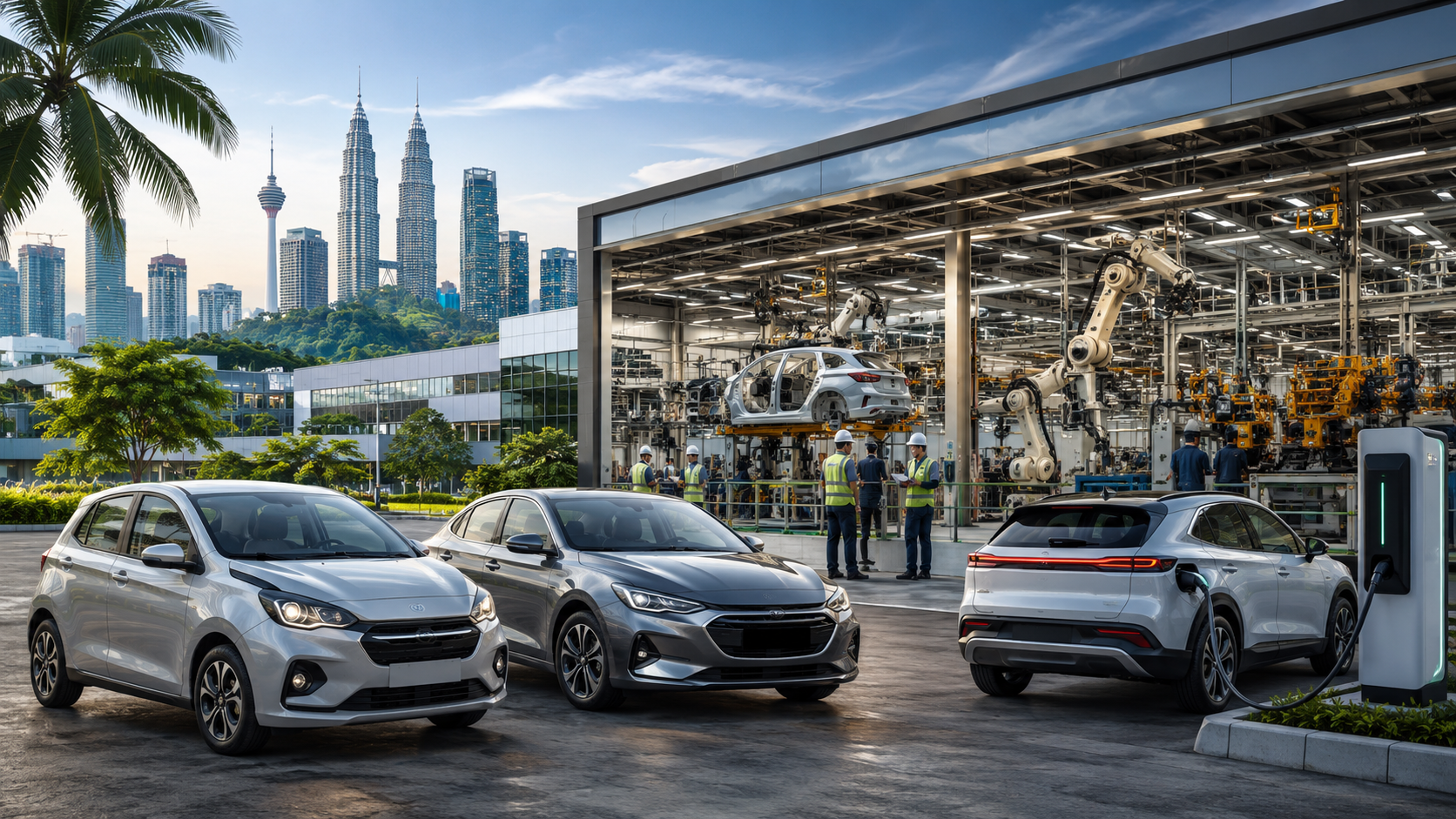
Malaysia’s automotive industry is undergoing one of its most significant transformations as electric vehicles (EVs) become a central focus of national industrial development. After decades of relying on conventional internal combustion engine vehicles, Malaysia is now accelerating toward a cleaner and more technology-driven automotive future.
The transition is not only changing consumer preferences but also reshaping manufacturing strategies, investment opportunities, supply chains, and the competitive landscape among local and international automotive companies.
Malaysia’s EV development is supported by government initiatives, international investments, and increasing consumer awareness of environmentally friendly transportation. The country aims to position itself as an important electric mobility hub within Southeast Asia by combining its existing automotive manufacturing capabilities with emerging EV technologies.
Official information on Malaysia’s EV-related policies and industrial direction is available through the Ministry of Investment, Trade and Industry (MITI):
https://www.miti.gov.my/
Malaysia’s Government Strategy to Accelerate EV Growth
The Malaysian government has identified electric mobility as a key component of future economic growth. Through policies such as the National Automotive Policy (NAP) 2020 and the New Industrial Master Plan 2030 (NIMP 2030), Malaysia has introduced strategies to encourage EV adoption, attract investment, and develop supporting infrastructure.
These strategies focus on several important areas:
- Increasing EV manufacturing capability
- Encouraging local automotive innovation
- Expanding charging infrastructure
- Supporting battery technology development
- Reducing carbon emissions from transportation
The government’s approach reflects a broader global movement where countries are competing to attract EV manufacturers, battery producers, and automotive technology companies.
Malaysia’s existing automotive ecosystem provides a strong foundation because the country already has experienced manufacturers, engineering talent, and component suppliers.
The Growing Presence of Global EV Brands in Malaysia
One of the most visible changes in Malaysia’s automotive market is the arrival and expansion of global EV manufacturers.
Chinese automotive companies, particularly BYD, have gained significant attention due to their competitive pricing, advanced battery technology, and wide range of electric models. BYD’s expansion in Malaysia demonstrates how rapidly the regional EV market is changing.
Tesla’s entry into Malaysia has also increased public interest in electric vehicles. The company’s presence has encouraged discussions about charging infrastructure, premium EV ownership, and technology-focused transportation.
The arrival of these global brands creates stronger competition for traditional automotive manufacturers while encouraging local companies to accelerate innovation.
For Malaysian consumers, increased competition means more choices in terms of vehicle range, pricing, technology features, and ownership models.
Proton and Perodua’s Role in Malaysia’s EV Future
As Malaysia’s national automotive leaders, Proton and Perodua play an essential role in the country’s electrification journey.
Proton has moved toward electrification through collaboration with Geely, a global automotive group with significant experience in EV development. This partnership provides Proton access to advanced vehicle platforms, battery technology, and electric mobility expertise.
Perodua, known for producing affordable vehicles, is also exploring electrification strategies that focus on making environmentally friendly vehicles accessible to mass-market consumers.
The challenge for both companies is balancing technological innovation with affordability. Unlike premium EV markets, Malaysia requires vehicles that match local purchasing power and practical driving needs.
Affordable EV models will likely become a critical factor in determining how quickly electric vehicles become mainstream among Malaysian consumers.
Challenges Facing Malaysia’s Electric Vehicle Expansion
Although EV adoption is growing, several challenges remain before electric vehicles achieve widespread acceptance.
The first challenge is charging infrastructure. Consumers continue to consider charging availability, travel distance, and charging speed when deciding whether to purchase an EV.
Another challenge is vehicle affordability. Battery technology remains one of the most expensive components of electric vehicles, making many EV models more expensive than conventional vehicles.
Malaysia must also strengthen its local EV supply chain, including battery-related industries, electronic components, and advanced automotive research capabilities.
Developing these industries will determine whether Malaysia becomes only an EV market or evolves into a regional EV manufacturing center.
Malaysia’s Opportunity as a Southeast Asian EV Hub
Malaysia has significant potential to become a competitive EV destination because of its established automotive history and strategic location.
With improvements in manufacturing technology, increasing foreign investment, and stronger government support, Malaysia can transition from traditional vehicle production toward future mobility solutions.
The EV transformation represents more than replacing gasoline-powered vehicles. It represents a broader industrial shift involving technology, sustainability, manufacturing innovation, and Malaysia’s ambition to remain competitive in the ASEAN automotive landscape.
