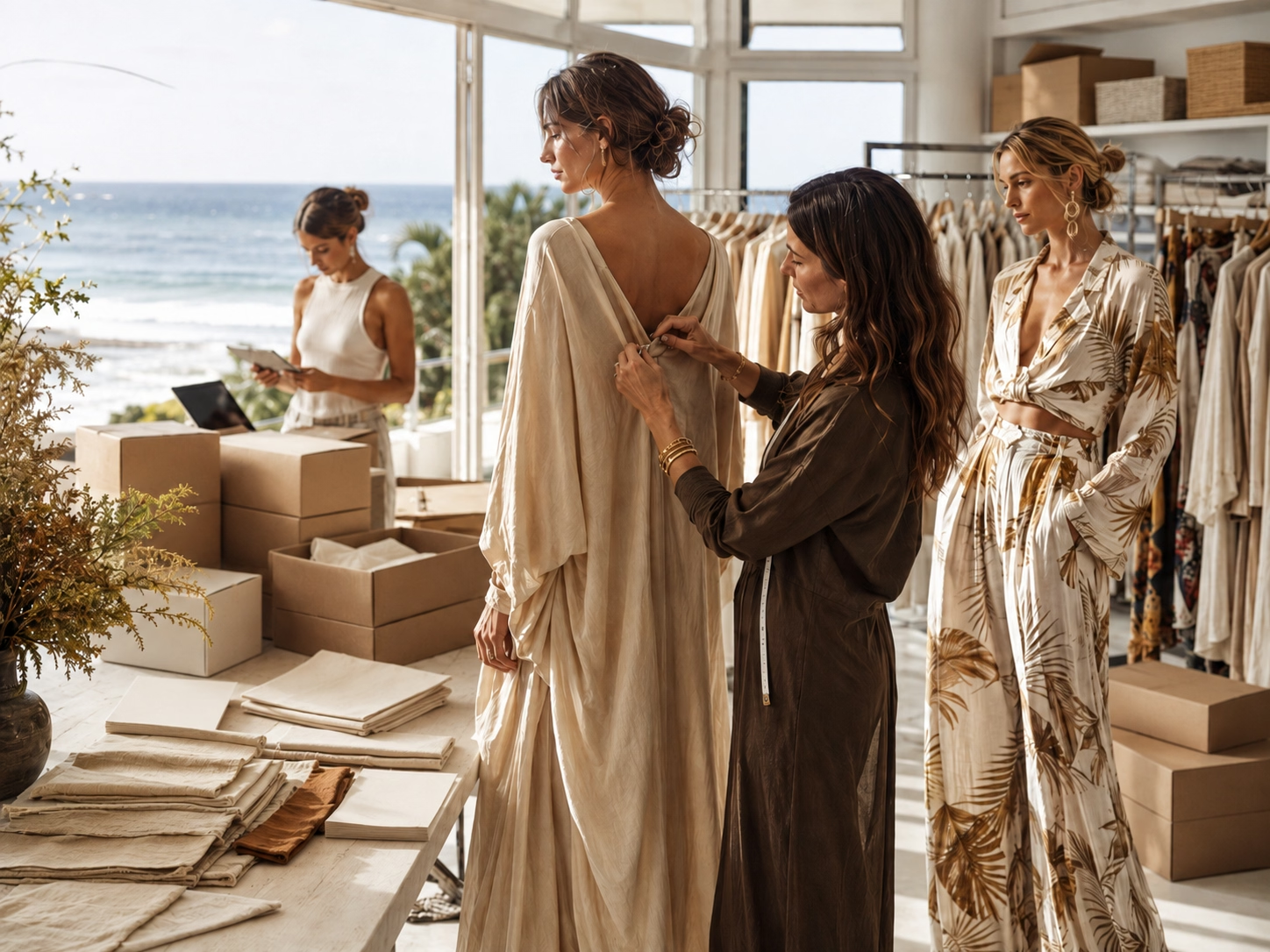
Sustainability has transitioned from a marketing buzzword to a foundational operational principle in the Australian apparel industry. Facing the harsh realities of climate change—including bushfires and coral bleaching—Australian designers are uniquely motivated to protect the environment they draw inspiration from. The resulting innovation is placing the country at the forefront of the global eco-luxury movement.
The Rise of Regenerative Fibers
Australian brands are looking beyond organic cotton toward regenerative agriculture. The focus has shifted to Merino wool and alpaca fibers, where farming practices actively restore soil health and sequester carbon. Brands such as Kowtow and Outland Denim have built their entire value proposition on transparency, proving that ethical production can coexist with high fashion.
The demand for traceability has accelerated the adoption of blockchain technology. In 2026, leading Australian labels are providing customers with digital “passports” for garments, detailing the exact farm of origin for the wool or the specific recycling facility for the thread. This level of detail is crucial for a market increasingly skeptical of “greenwashing.”
From Zero Waste to Circular Systems
The concept of zero-waste pattern cutting, where fabric usage is maximized in the design phase, is gaining traction. Melbourne-based designers are pioneering techniques that reduce textile waste by up to 15% per collection. Furthermore, the rental and resale market is booming.
Platforms like The Volte and brand-led resale hubs are extending the lifecycle of Australian garments. This circular economy model not only reduces landfill but also opens new revenue streams. Brands are realizing that a high-quality garment can be monetized multiple times, shifting the focus from volume to longevity.
Navigating the Green Claims Code
However, the industry is also grappling with stricter regulatory scrutiny. The Australian Competition and Consumer Commission (ACCC) has cracked down on vague environmental claims. This has forced fashion brands to substantiate their “sustainable” labels with hard data.
The shift is professionalizing the sector. Sustainability officers are now common in Australian fashion houses, tasked with navigating complex compliance landscapes while still pushing creative boundaries. The fusion of science and style is becoming the defining characteristic of the modern Australian label, ensuring that the industry’s growth is as responsible as it is lucrative.
