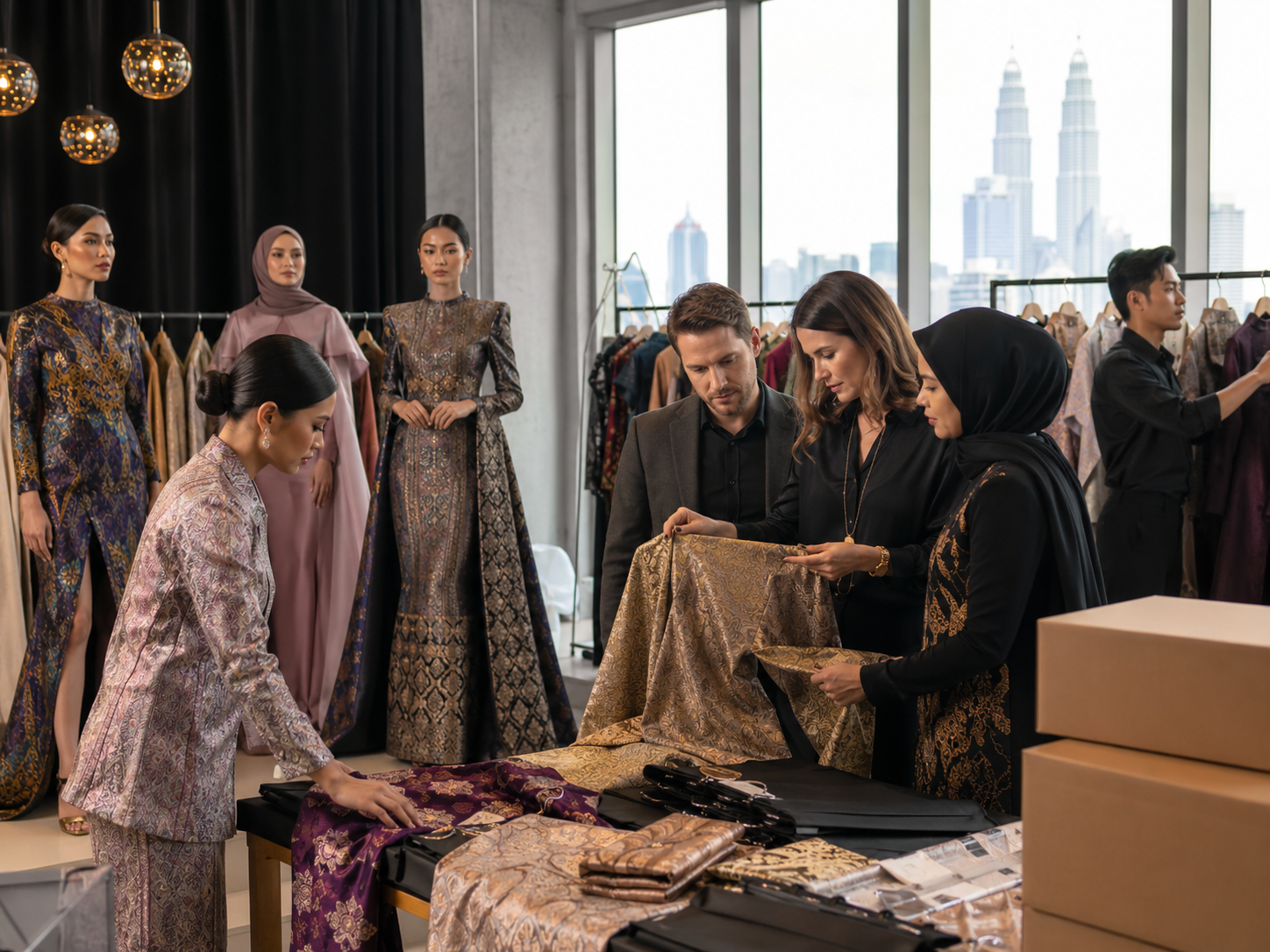
Each year, Kuala Lumpur Fashion Week showcases the country’s design talent. But the real story is what happens after the runway lights dim: Malaysian labels are translating local visibility into export orders. From couture houses to ready-to-wear brands, the industry is building a cross-border presence that extends far beyond Southeast Asia.
From Local Runways to International Order Books
Brands that once relied on domestic bridal clients now ship to the Gulf and Europe. Rizman Ruzaini’s embellished gowns have attracted clients in the Middle East and celebrity stylists abroad. Fiziwoo’s structured evening wear has found a second home in Dubai and Riyadh. Mimpikita’s accessible occasionwear is sold through regional e-commerce and has attracted wholesale interest from Singapore and Brunei. These success stories reflect a deliberate shift from artisanal craft to scalable fashion enterprises.
Heritage Textiles as a Competitive Advantage
What sets Malaysian designers apart is their use of songket, batik, and tenun in contemporary cuts. Rather than copying Western trends, labels are creating a unique aesthetic that appeals to both modest fashion consumers and high-end boutiques. This differentiation is crucial in markets where traditional modest wear from Turkey, Indonesia, and the UAE already dominates. Malaysian designers combine Southeast Asian craft with clean tailoring, a niche that global buyers increasingly recognize.
Government and Digital Infrastructure
Malaysia’s trade promotion agency MATRADE provides export readiness programs, market access grants, and participation in international trade shows. The country’s investment promotion body, MIDA, also identifies fashion and textile as a strategic sector for design-led manufacturing. According to MIDA’s industry overview, local brands are encouraged to adopt digital design tools, sustainable sourcing, and regional branding. Read the full sector overview here: https://www.mida.gov.my/industries/services/fashion-and-textile/. Meanwhile, Zalora and TikTok Shop give small labels instant access to overseas consumers, reducing dependence on expensive physical retail.
The Modest Fashion Export Window
The global modest fashion economy is estimated at more than US$300 billion annually, and demand continues to rise in both Muslim-majority and Western markets. Malaysia is well positioned due to its halal ecosystem, multicultural design vocabulary, and established modest wear brands. Participation in Dubai Modest Fashion Week, Jakarta Fashion Week, and London Modest Fashion Week has connected KL designers with international buyers, stylists, and media. This exposure is converting one-time admirers into repeat wholesale accounts.
The FashionValet Lesson and Future Funding
The 2024 FashionValet restructuring, in which Khazanah Nasional and PNB sold their stakes at a loss, revealed the dangers of rapid expansion without strong financial controls. However, the episode also pushed investors and founders to prioritize unit economics, transparent governance, and sustainable growth. As a result, new funding is flowing toward profitable niche brands rather than cash-burning platforms. This healthier capital environment could support the next phase of international expansion for Malaysian fashion.
