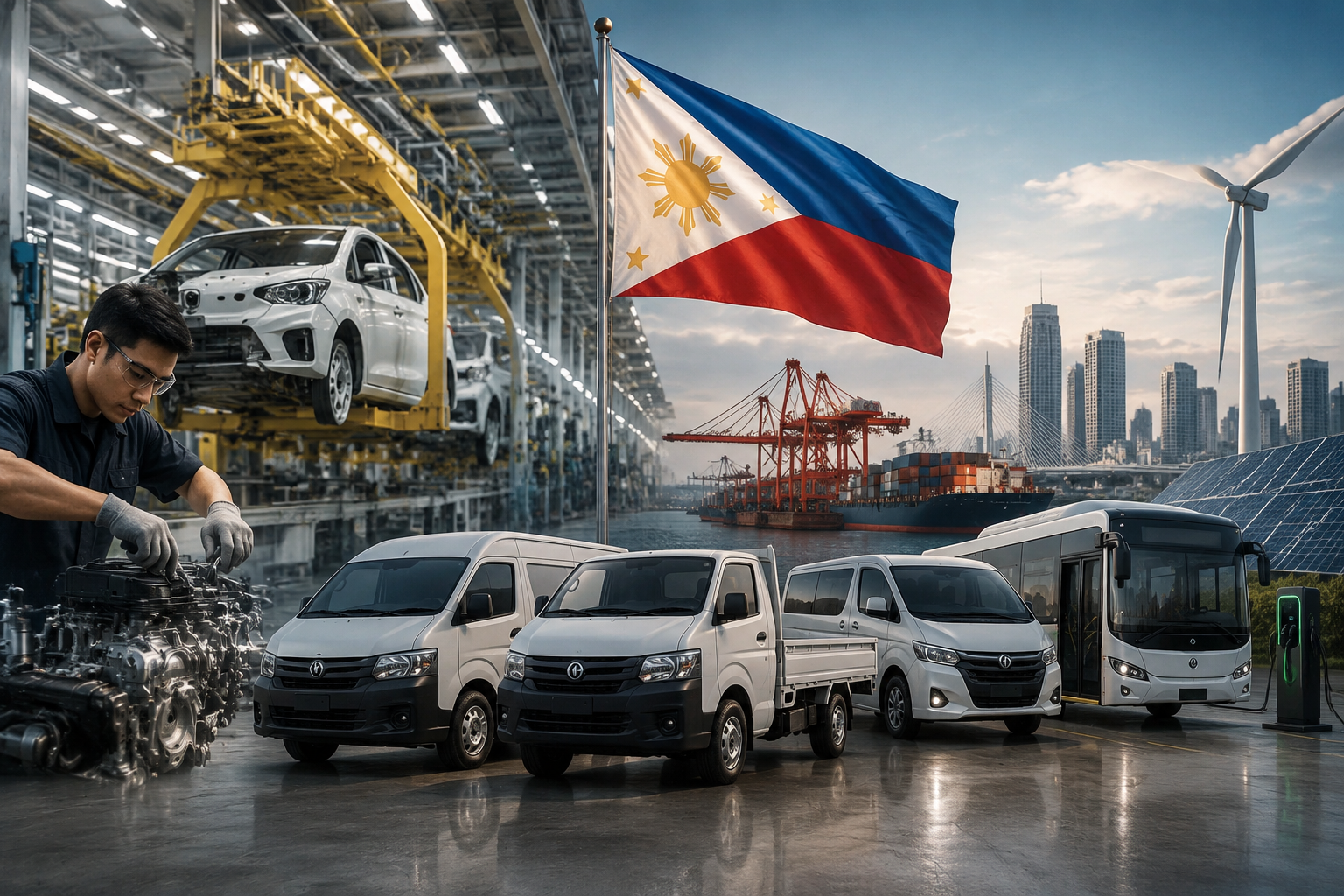
The Philippine automotive industry is gradually shifting from a market dominated entirely by gasoline and diesel vehicles toward a more diversified mix of hybrids, battery-electric vehicles, and electric commercial fleets.
This transition is being driven by high fuel costs, urban air-quality concerns, new vehicle brands, and government policies supporting cleaner transportation. However, the pace of adoption differs significantly between Metro Manila, major provincial cities, and areas where public charging infrastructure remains limited.
A central policy foundation is Republic Act No. 11697, known as the Electric Vehicle Industry Development Act. The full law is available through the Philippine Official Gazette. EVIDA establishes a national framework covering electric vehicle adoption, charging stations, fleet transition, investment incentives, and industry development.
The legislation is important because it treats electric mobility as more than a consumer trend. It connects transportation policy with energy planning, manufacturing, infrastructure, and environmental objectives.
Hybrid Vehicles Are Becoming a Practical Bridge
Battery-electric vehicles receive much of the attention, but hybrids may play a larger near-term role in the Philippines. Hybrid models provide lower fuel consumption without requiring drivers to depend entirely on public charging stations.
This is particularly relevant in an archipelago where transport conditions vary widely. A driver traveling primarily within Metro Manila may have access to chargers at shopping centers, offices, or residential developments. A vehicle owner making frequent provincial trips may still face uncertainty about charger availability, compatibility, and reliability.
Hybrid vehicles reduce this concern while allowing consumers to become familiar with electrified powertrains. For manufacturers, they also provide an intermediate step before broader battery-electric adoption.
New Brands Are Changing Market Expectations
The expansion of Chinese electric vehicle manufacturers and the entry of internationally recognized EV companies have increased competitive pressure. Consumers are now comparing vehicles based on battery range, software, charging speed, driver-assistance features, warranty coverage, and total ownership cost.
BYD’s expansion through ACMobility and Tesla’s official entry into the Philippine market illustrate how quickly the competitive landscape can change. Established Japanese and Korean manufacturers are responding with hybrid models, electrified crossovers, and longer-term battery-electric plans.
This competition could benefit consumers through greater model choice and more aggressive pricing. It also forces dealerships and service centers to train technicians in battery diagnostics, high-voltage safety, and software-based maintenance.
Charging Access Remains the Critical Test
Private home charging is likely to support many early adopters, especially homeowners with dedicated parking. The challenge is more complicated for condominium residents, tenants, taxi operators, and commercial fleets.
Property managers must address electrical capacity, billing systems, fire-safety requirements, and charger allocation. Public chargers must also be located along routes that drivers actually use rather than being installed simply to meet promotional targets.
Electric Mobility Is Larger Than Private Cars
The most significant electrification opportunities may emerge in motorcycles, delivery fleets, buses, and public utility vehicles. These vehicles often travel predictable routes and accumulate high daily mileage, making fuel savings more meaningful.
Electric jeepneys and delivery vans can produce operational savings when charging, maintenance, financing, and route planning are properly coordinated. Poorly designed programs, however, may transfer excessive costs to drivers or small operators.
The future Philippine vehicle market will not be exclusively electric in the immediate term. Gasoline models, diesel commercial vehicles, hybrids, and battery-electric vehicles will coexist. The decisive factor will be whether infrastructure and financing develop quickly enough to make electrified vehicles practical beyond wealthy early adopters.
