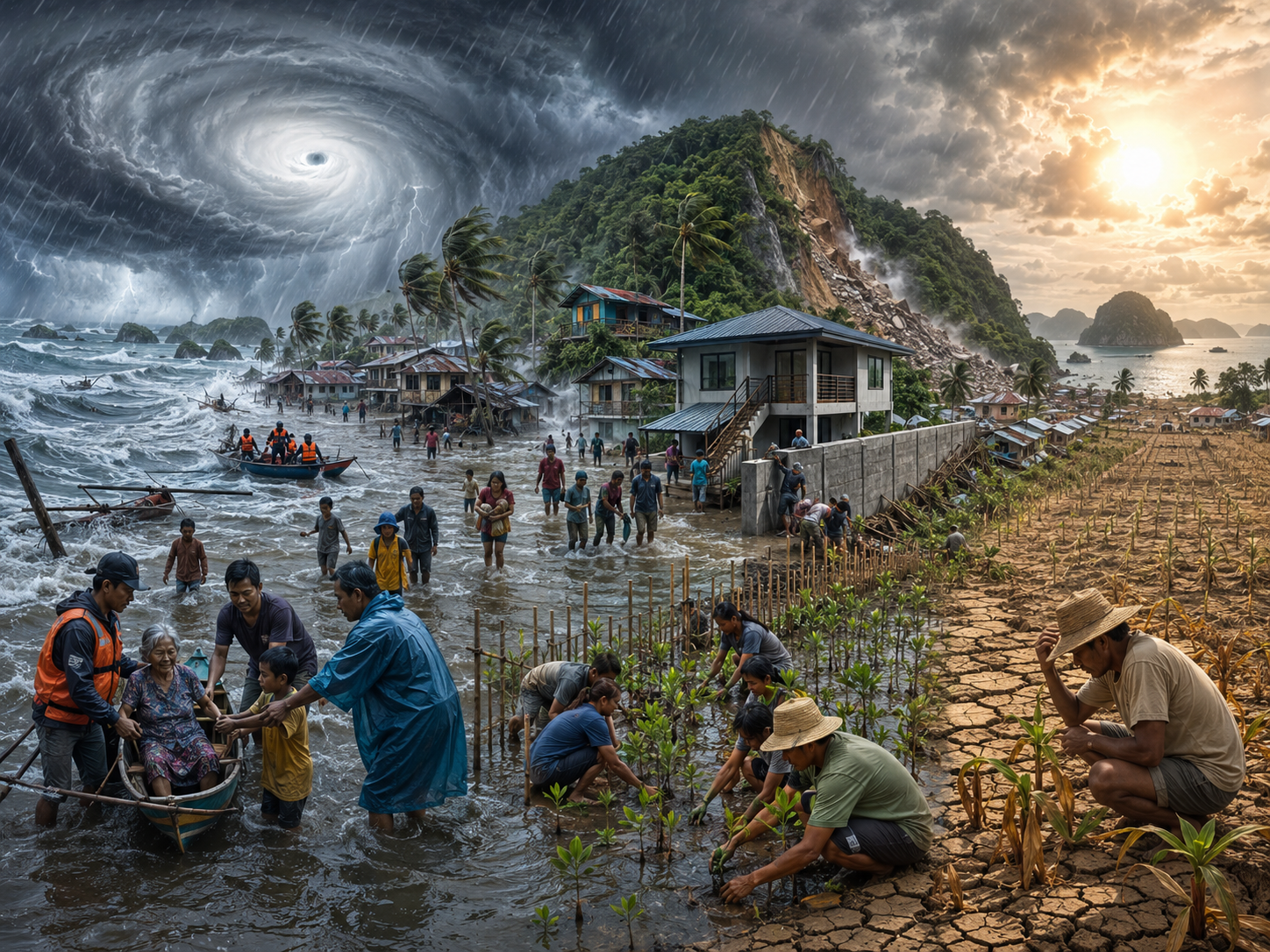
The Philippines, an archipelagic nation situated in the Pacific Ring of Fire, is one of the countries most vulnerable to climate change and natural disasters. With over 7,000 islands, it experiences frequent typhoons, flooding, landslides, and rising sea levels, all of which are being exacerbated by shifting climate patterns. Experts warn that climate-related hazards not only threaten the environment but also jeopardize livelihoods, health, and the overall economy.
Typhoons, locally known as bagyo, are a recurring threat in the country. According to the Philippine Atmospheric, Geophysical, and Astronomical Services Administration (PAGASA), the country faces around 20 typhoons annually, with approximately five considered destructive. Climate change intensifies these storms, making them stronger and more unpredictable. The resulting floods and landslides displace thousands of people each year, often destroying homes, infrastructure, and agricultural lands. Communities in low-lying coastal areas are particularly susceptible, as rising sea levels worsen the impact of storm surges.
Beyond typhoons, prolonged droughts and heatwaves are increasingly affecting agricultural productivity. The Philippines’ economy relies heavily on agriculture, with millions of small-scale farmers depending on rice, corn, and coconut production. Changing rainfall patterns disrupt planting cycles, reduce crop yields, and threaten food security. This, in turn, increases the vulnerability of marginalized populations who have limited resources to adapt to these environmental shocks.
Government agencies have implemented measures to strengthen disaster preparedness. The National Disaster Risk Reduction and Management Council (NDRRMC) coordinates early warning systems, evacuation plans, and post-disaster response initiatives. Investments in resilient infrastructure, such as flood barriers and reinforced housing, are underway to minimize the loss of life and property. Moreover, local governments encourage community-based disaster risk reduction programs, which involve training citizens to respond effectively during emergencies.
Community participation plays a vital role in building resilience. Residents engage in mangrove reforestation, coastal cleanups, and other ecological restoration projects that reduce the impact of storm surges and flooding. Educational programs on climate adaptation equip citizens with practical knowledge, such as sustainable farming techniques and emergency preparedness strategies. NGOs also support vulnerable communities, focusing on risk assessment, disaster drills, and resource mobilization.
International collaboration is another key element. The Philippines receives technical and financial support from global organizations to implement climate adaptation and mitigation projects. These efforts include renewable energy initiatives, climate-resilient infrastructure development, and disaster management technology transfer. The integration of global best practices helps the country enhance its capacity to withstand the growing threats posed by climate change.
Ultimately, addressing climate-related risks in the Philippines requires a comprehensive, multi-level approach. Combining government action, community engagement, and international cooperation is essential to protect both people and ecosystems. As natural disasters become more frequent and intense, the nation’s ability to anticipate, prepare for, and adapt to these challenges will determine its long-term resilience.
