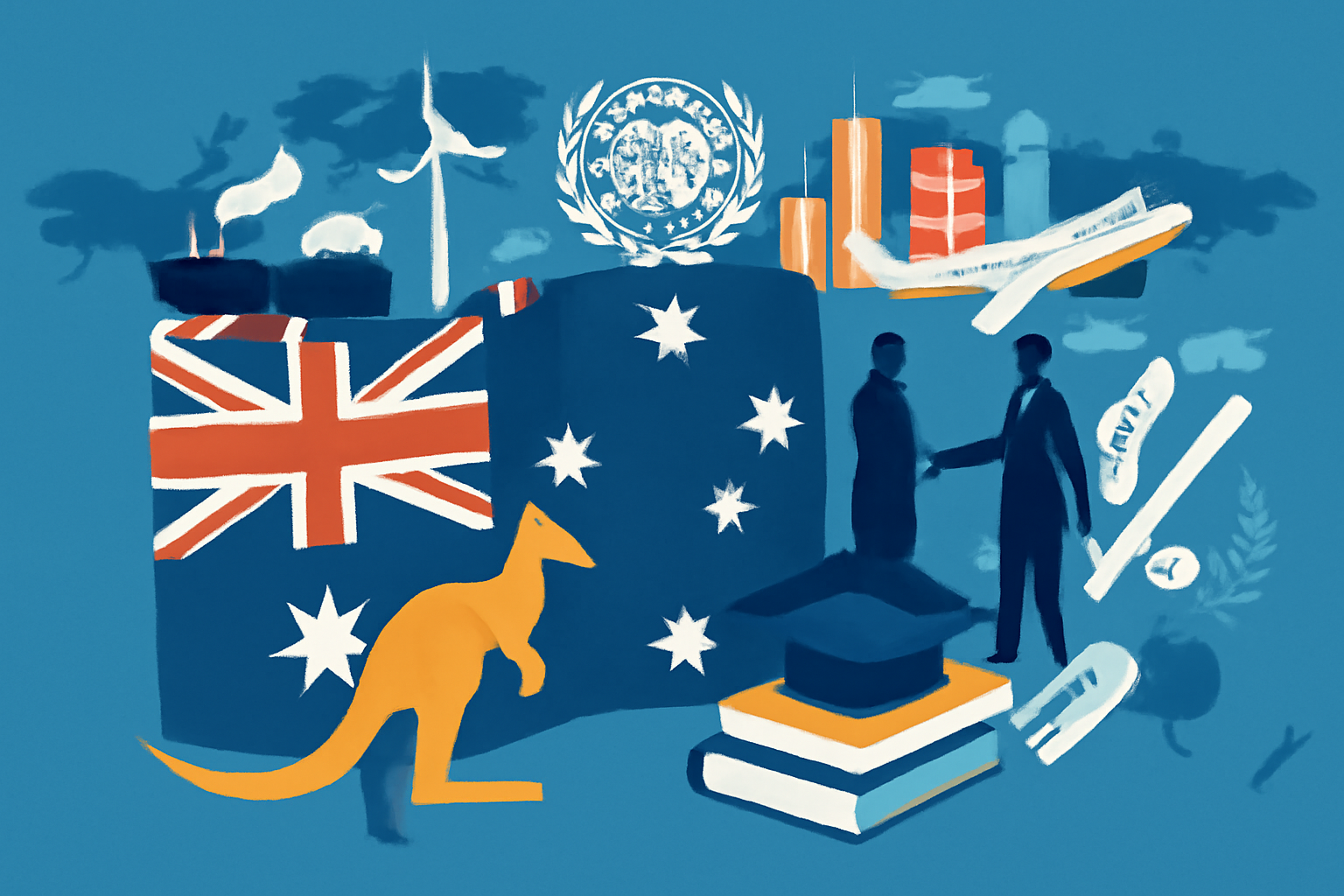
Australia, often thought of as a remote country in the Southern Hemisphere, has a surprisingly significant role in shaping global events. From economic leadership to diplomatic influence, security contributions, and environmental advocacy, Australia stands as a crucial actor in the international community. This article examines the multifaceted ways in which Australia impacts global politics and how it continues to assert itself as a respected middle power.
At the forefront of Australia’s global influence is its robust economy. As one of the world’s largest exporters of essential natural resources such as coal, iron ore, and liquefied natural gas, Australia plays a pivotal role in supporting the manufacturing and energy sectors across the globe. Australia’s primary trade partners, including China, Japan, and the United States, rely heavily on these resources, further enhancing Australia’s position in the global economic hierarchy. Moreover, Australia is actively involved in several free trade agreements and international economic organizations, which help drive the country’s trade and diplomatic policies.
In the realm of diplomacy, Australia is a strong advocate for international cooperation and peace. The country’s active participation in the United Nations and other multilateral organizations highlights its commitment to addressing global challenges such as poverty, conflict, and human rights. Australia also plays a key role in peacekeeping operations, often contributing personnel to United Nations missions in conflict zones. By fostering strong relationships with both regional and global powers, Australia has positioned itself as a key diplomatic mediator and peace advocate.
Australia’s security strategy is primarily shaped by its long-standing alliance with the United States, formalized through the ANZUS Treaty. This defense pact ensures that both countries share a mutual interest in maintaining security in the Indo-Pacific region, an area of increasing strategic importance. Australia’s defense posture also extends to its collaborations with other regional powers such as Japan and India, as well as its active participation in multinational security agreements. Australia’s role in maintaining peace and stability in the Indo-Pacific has made it a trusted partner in global security.
On the environmental front, Australia has made progress in addressing climate change despite facing domestic political challenges. The country is a signatory of the Paris Agreement, committing to reduce its greenhouse gas emissions and invest in renewable energy technologies. Australia’s vast natural environments, including the Great Barrier Reef, give it a unique opportunity to lead in biodiversity conservation and environmental advocacy. The country continues to push for global climate action, balancing its environmental responsibilities with its economic priorities.
Culturally, Australia’s influence is felt globally through its entertainment, education, and sporting achievements. The Australian film and television industry has produced internationally recognized works, contributing to the country’s soft power. Australia’s universities attract thousands of international students, fostering cross-cultural exchange and strengthening the country’s intellectual influence. The success of Australian athletes in the Olympics and other international sporting events further enhances Australia’s global image.
Australia’s comprehensive approach to global affairs—spanning economics, diplomacy, security, and culture—ensures its continued relevance and influence on the world stage. The nation’s ability to navigate complex global challenges while promoting multilateral cooperation positions it as a key player in shaping the future of international relations.
