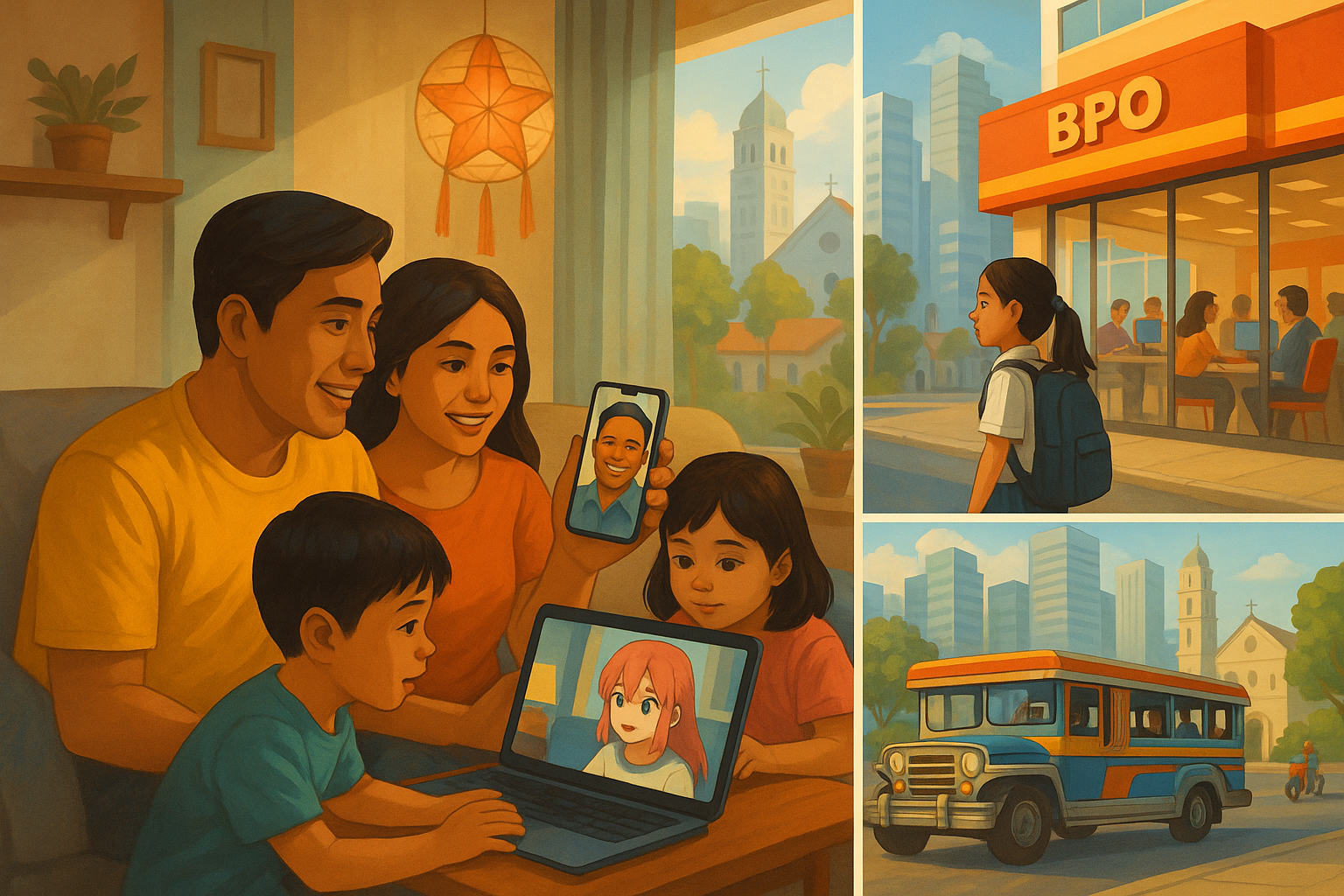
In the Philippine context, globalization is experienced most strongly within families and communities. Rather than being an abstract global system, it appears in the form of remittance money, foreign brands, streaming platforms, and new job opportunities. Many Filipino households rely on relatives who work in other countries, while local streets are filled with advertisements from global companies. These elements combine to change how people relate to each other, how they spend their time, and what they expect from the future.
Family structures are particularly affected by labor migration and global employment. When a parent leaves to work overseas, daily routines shift dramatically. Grandparents, aunts, or older siblings often step into caregiving roles, while children grow up maintaining relationships through video calls and chat messages. The money sent home allows families to build houses, pay school fees, and buy modern devices, improving material conditions. Yet emotional distance, missed milestones, and the stress of long-distance relationships can strain family bonds. Globalization, in this sense, supports the family financially while testing its emotional resilience.
Inside the home, entertainment and media strongly reflect global influences. Streaming services and cable television offer a wide selection of foreign shows, films, and music. Children may know more about American superheroes or Korean idols than about local folklore or traditional songs. This can lead to a subtle shift in values and dreams; becoming a vlogger, gamer, or influencer may seem more appealing than following traditional careers. Still, local media companies respond by blending Filipino stories with global formats, producing content that resonates both locally and internationally.
Community life is also transforming. In urban areas, shopping malls and commercial centers often replace traditional plazas as the main gathering places. These malls host global food chains and international clothing brands, creating a standardized kind of social space that looks similar in many countries. Meanwhile, community events such as barangay festivals, church activities, and local sports leagues continue to bring people together. Globalization adds new layers to these gatherings, such as using international pop music during parades or promoting events online through social media.
Religious practices in the Philippines, especially Catholicism, interact in interesting ways with global trends. On one hand, global media can promote more secular lifestyles, emphasizing individual freedom and consumer pleasure. On the other hand, religious institutions use the same technologies—live streams, social networks, messaging apps—to reach their members and share teachings. Everyday religious observance thus becomes part of a global conversation, where ideas from other countries influence local debates on morality, family values, and social issues.
Language use in daily life reflects another dimension of social change. English, Tagalog-based Filipino, and regional languages are constantly mixed in conversation. Globalization encourages the use of English in workplaces, schools, and online spaces, especially among the youth. This can open doors to international opportunities but may also weaken the use of some local languages over time. The challenge for many Filipinos is to maintain their rich linguistic diversity while staying competitive and connected in a globalized world. Through all these changes, Filipino resilience and adaptability remain central, as communities find ways to incorporate global influences without losing their core sense of identity.
