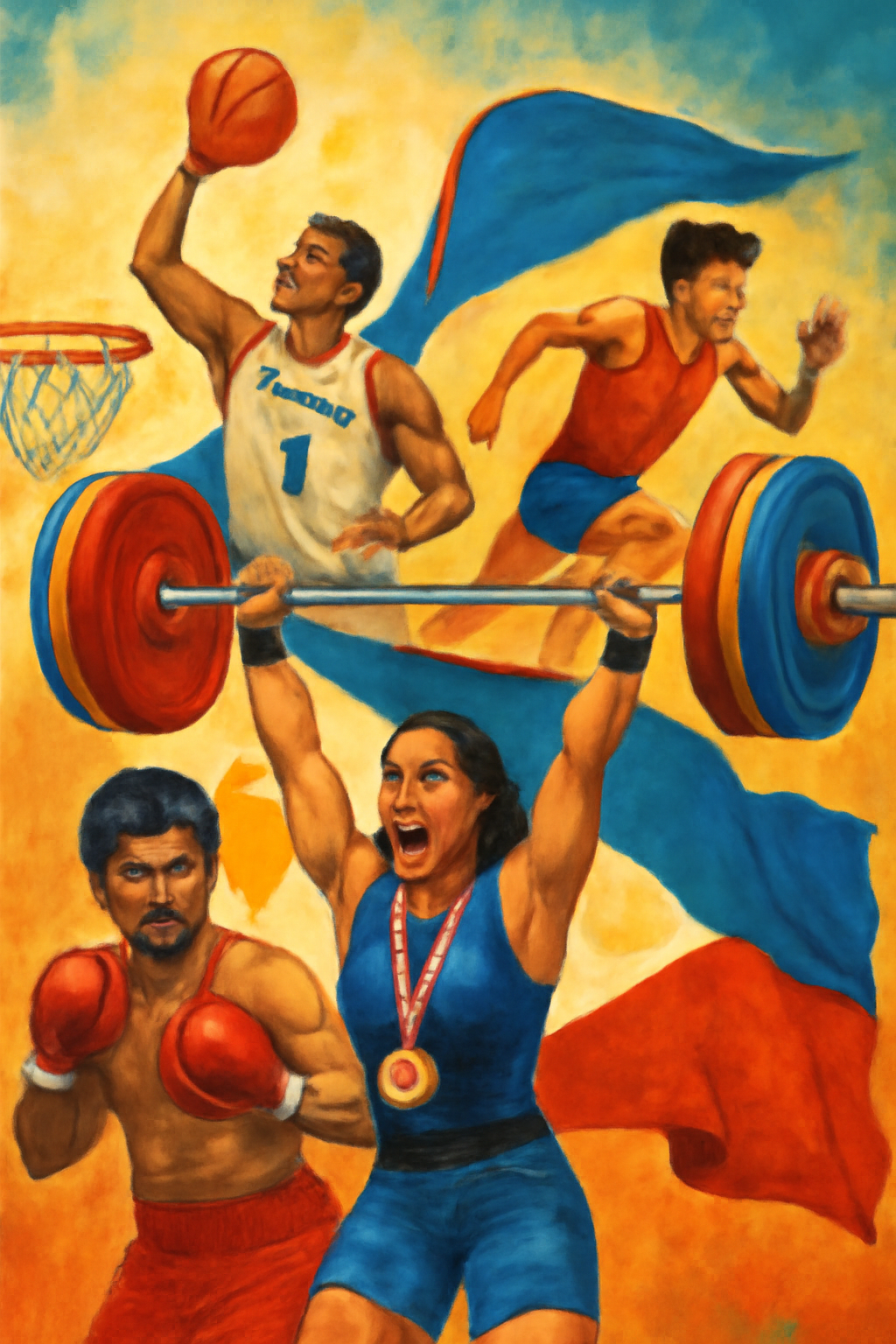
Sports have long been an integral part of Filipino culture, and Filipino athletes have made significant contributions to the global sporting landscape. From historic Olympic victories to world championships in boxing, the Philippines has experienced notable successes on the international stage. However, these triumphs have been accompanied by persistent challenges, ranging from a lack of resources to difficulties in accessing world-class training.
The Philippines’ greatest sporting moment in recent years came at the 2020 Tokyo Olympics, where Hidilyn Diaz made history by winning the country’s first-ever Olympic gold medal in weightlifting. Diaz’s victory was a breakthrough for the Philippines, not only because of the achievement itself but also because it showcased the potential of Filipino athletes across a variety of sports. Her journey was a testament to the resilience and dedication required to succeed at the highest levels of competition, and it has inspired countless other young athletes to pursue their dreams.
The Philippines is also renowned for its prowess in boxing, with Manny Pacquiao being the most famous example. Pacquiao’s rise to international fame made him one of the greatest athletes in the history of the sport. His success has helped shine a spotlight on Filipino boxing, with many other athletes like Nonito Donaire and Nesthy Petecio following in his footsteps. These athletes have made significant contributions to the Philippines’ reputation in international boxing competitions, often bringing home world titles and achieving significant milestones.
Basketball holds a special place in the hearts of Filipinos, and the Philippine national team, Gilas Pilipinas, has had success in regional tournaments like the FIBA Asia Cup. The Philippine Basketball Association (PBA) has also played a crucial role in nurturing local talent and providing a platform for players to showcase their skills. Basketball’s immense popularity in the Philippines ensures that athletes in the sport receive considerable public support, which helps them compete at a high level internationally.
However, despite these successes, Filipino athletes face a number of challenges when competing on the global stage. One of the most pressing issues is the lack of adequate infrastructure for training. Many athletes struggle to access modern facilities, which hampers their development. For instance, track and field athletes may not have access to world-class stadiums, while swimmers might face limitations in training pools. This lack of infrastructure limits the ability of athletes to reach their full potential, especially when competing against countries with better resources.
Additionally, the financial support available to Filipino athletes is often insufficient. Many athletes rely on government funding or sponsorships, but for some, these resources are scarce. This creates disparities, as only a few athletes in high-profile sports like boxing and basketball receive significant backing, while those in less popular sports struggle to secure financial support. As a result, many talented athletes are forced to abandon their sporting dreams due to financial constraints.
Finally, a lack of structured sports development programs remains a significant barrier for Filipino athletes. Although there is a great deal of raw talent in the country, many young athletes do not have access to specialized training or guidance. This lack of formal systems for scouting and nurturing talent makes it harder for Filipino athletes to compete at the highest levels, as their development is often delayed or inconsistent.
Despite these challenges, Filipino athletes continue to achieve remarkable success on the world stage. With greater investment in sports infrastructure, more financial backing, and improved development programs, the Philippines has the potential to produce more champions and solidify its place in the global sports community.
