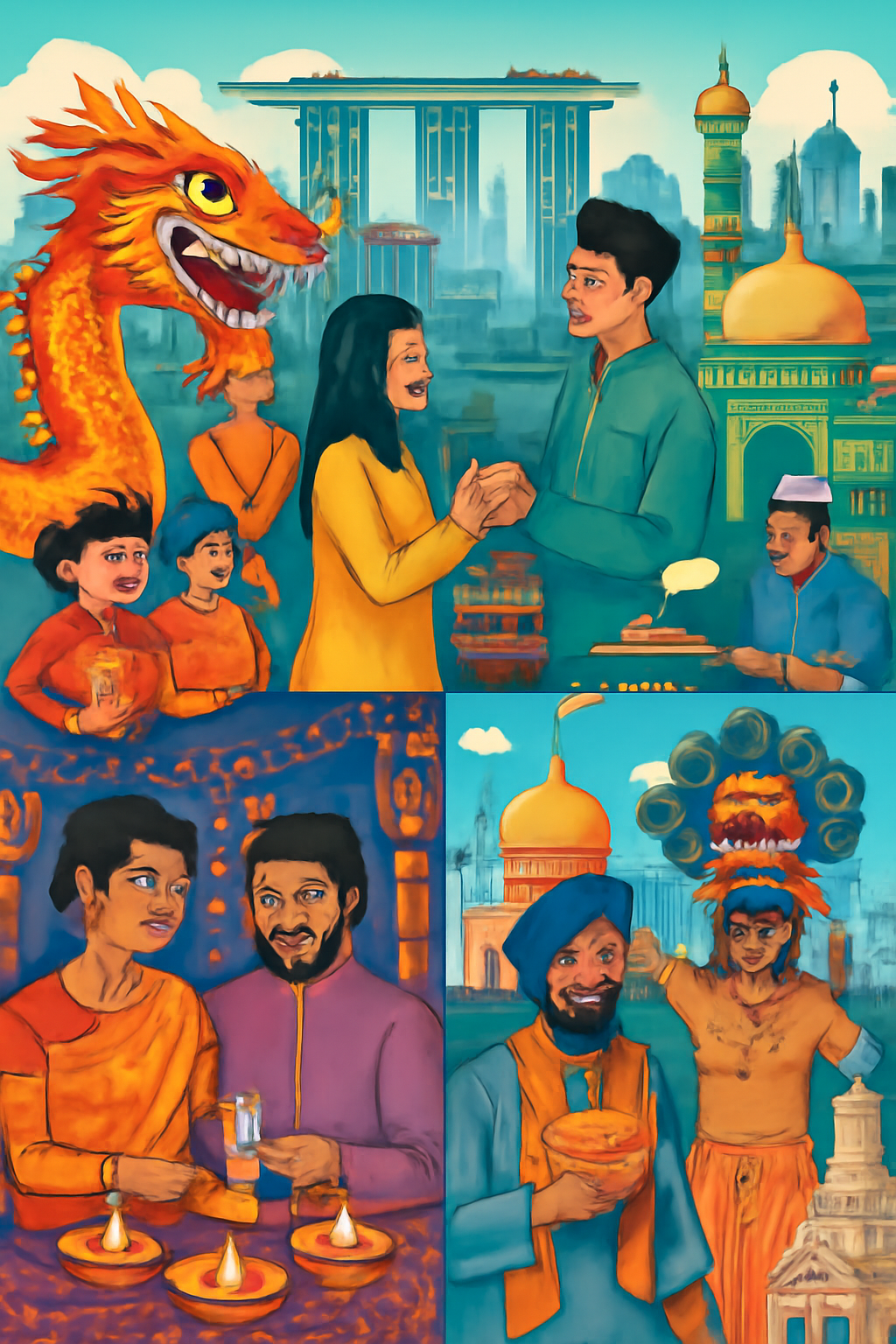
Singapore is a melting pot of cultures, and this is beautifully demonstrated through its diverse range of festivals. These celebrations are a testament to the country’s harmonious coexistence of different ethnic groups, each with its own rich traditions and customs. From the Lunar New Year to Deepavali and Hari Raya Puasa, these festivals provide an opportunity for people of all backgrounds to come together and appreciate the cultural diversity that defines Singapore.
Chinese New Year is perhaps the most iconic of all Singapore’s festivals. The festivities, which last for two weeks, involve families gathering to enjoy traditional foods, exchange gifts, and participate in time-honored rituals. The streets of Singapore are transformed with red decorations, believed to bring good fortune and happiness. The Chingay Parade, a grand procession featuring floats, performances, and lion dances, is one of the main highlights of this celebration. It is an exuberant display of Singapore’s rich cultural diversity, with participants from different ethnic backgrounds coming together to celebrate.
Hari Raya Puasa, a key festival for the Malay Muslim community, marks the end of the Ramadan fasting month. This festival is filled with joy, as families come together for prayers and lavish meals. The Geylang Serai district, known for its rich Malay culture, is a hub of activity during Hari Raya, with markets selling traditional Malay delicacies like nasi lemak, satay, and rendang. Hari Raya is a time for reflection, charity, and a celebration of faith.
For Hindus, Deepavali is one of the most significant festivals, symbolizing the triumph of light over darkness. During Deepavali, homes are adorned with diyas (oil lamps), and the air is filled with the aroma of incense. The streets of Little India are decorated with intricate light displays, and the festival is marked by prayers, family gatherings, and the sharing of traditional sweets like laddu, barfi, and gajar ka halwa. It is a time for Hindus to celebrate the victory of good over evil and to renew their spiritual connection.
For the Sikh community, Vaisakhi is a deeply meaningful celebration, marking both the harvest season and the founding of the Khalsa in 1699. During Vaisakhi, Sikhs gather at Gurdwaras for prayers and to participate in the tradition of langar, where a free meal is served to everyone, regardless of background. Vaisakhi emphasizes the values of equality, selfless service, and community, and it brings people together to celebrate their shared faith and heritage.
Thaipusam, a striking Hindu festival dedicated to Lord Murugan, is characterized by a grand procession and acts of devotion such as carrying kavadis—elaborate structures attached to the body. The procession from the Sri Srinivasa Perumal Temple to the Sri Thendayuthapani Temple in Singapore is an intense and awe-inspiring spectacle, with devotees demonstrating incredible physical endurance as an expression of their faith and devotion.
Each of these festivals plays a crucial role in Singapore’s multicultural landscape, allowing individuals to celebrate their own traditions while embracing the diversity that makes the country unique. These festivals are a true reflection of Singapore’s spirit of unity in diversity, fostering mutual understanding and respect among all who call the city home.
