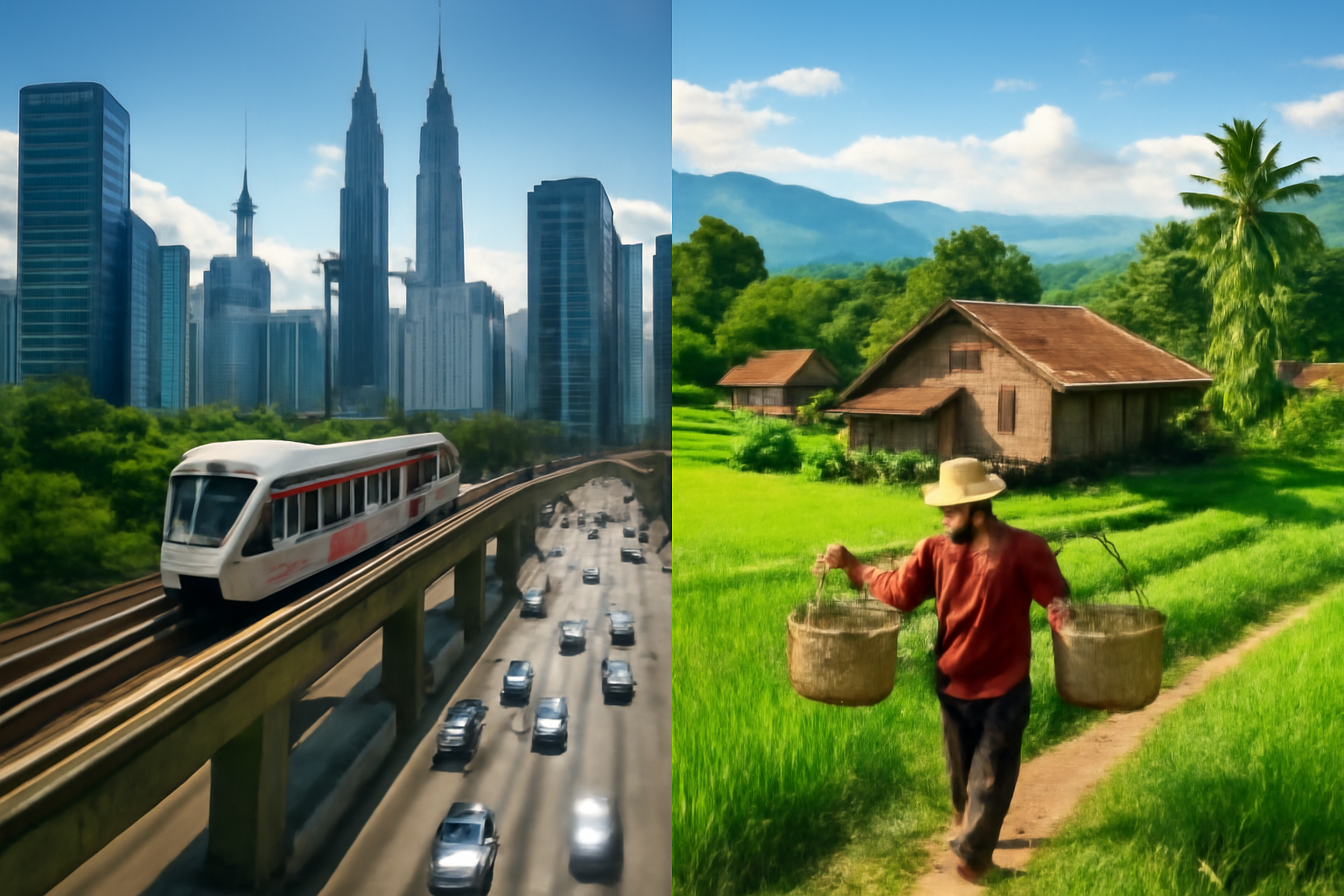
Malaysia presents a compelling study in contrast between the bustling cities and tranquil villages. The divide between urban and rural living is significant, with each offering unique opportunities, challenges, and a distinct lifestyle. Understanding these differences helps Malaysians and expats alike make informed choices about where to live and what lifestyle best suits their aspirations.
Urban Living in Malaysia
The cities of Malaysia, such as Kuala Lumpur, Penang, and Johor Bahru, are known for their modernity and vibrancy. These urban hubs are home to skyscrapers, shopping malls, and sophisticated public infrastructure. Residents in cities can enjoy conveniences like fast internet, high-quality healthcare, and a wide range of employment opportunities. The competitive job market in urban centers is diverse, with opportunities in industries like finance, technology, and education.
However, urban life comes at a high cost. The rapid growth of the population has led to increased demand for housing, pushing property prices beyond the reach of many. Commuting can also be stressful, with traffic congestion making daily travel time-consuming. Moreover, cities face environmental issues like pollution, with poor air quality being a concern in major cities like Kuala Lumpur. Despite these challenges, cities remain the economic and cultural hubs of the country, offering a fast-paced, dynamic lifestyle.
Rural Life in Malaysia
Rural life in Malaysia is often seen as more relaxed and close to nature. In rural areas like Sabah, Kelantan, and Terengganu, residents enjoy a quieter lifestyle, often relying on agriculture, fishing, and small-scale businesses. The bond between people in rural communities is strong, with many families having lived in the same villages for generations. The slower pace of life offers a stark contrast to the hustle and bustle of the city.
Yet, rural life also has its drawbacks. While the cost of living is lower, rural residents face limited access to key services such as healthcare and education. The availability of well-paying jobs is restricted, with most rural jobs focused on agriculture or crafts. Additionally, rural areas may lack proper infrastructure, such as well-maintained roads, internet access, or reliable public transport, which can make daily life more challenging.
Challenges Faced by Both Urban and Rural Areas
Urban areas in Malaysia are grappling with high living costs, overcrowding, and pollution. As cities continue to expand, issues like traffic jams, air pollution, and noise have become more prevalent. Housing affordability is also a growing concern, particularly in cities like Kuala Lumpur, where property prices have soared, leaving many unable to afford their own homes. Moreover, urban living can feel impersonal and disconnected, as the fast-paced nature of city life often leads to a lack of meaningful social interactions.
On the other hand, rural areas, while offering affordable living, often struggle with limited access to essential services. Healthcare and education facilities may be insufficient, and residents may need to travel long distances for even basic services. Employment opportunities are also fewer, and income levels tend to be lower than in the cities. Furthermore, rural areas often face challenges related to infrastructure, including unreliable electricity, limited internet coverage, and poorly maintained roads.
Opportunities in Both Spheres
Despite the challenges, both urban and rural areas offer significant opportunities. In urban areas, the job market is diverse, with opportunities in high-paying industries such as banking, healthcare, and tech. Cities also provide a hub for entrepreneurship, with a thriving startup culture and access to venture capital.
Rural areas, on the other hand, are seeing a rise in eco-tourism and organic farming, creating new opportunities for sustainable businesses. The government has also introduced various rural development initiatives aimed at improving infrastructure, education, and healthcare. These measures have provided rural residents with new tools for economic growth, including access to digital platforms that allow them to market their products or services more effectively.
In summary, urban and rural Malaysia each offer distinct experiences that come with their own sets of advantages and challenges. By understanding the unique attributes of both environments, individuals can make more informed decisions about where they want to live and work. The growing development of rural areas, combined with the opportunities in urban centers, offers Malaysians a variety of ways to thrive.
