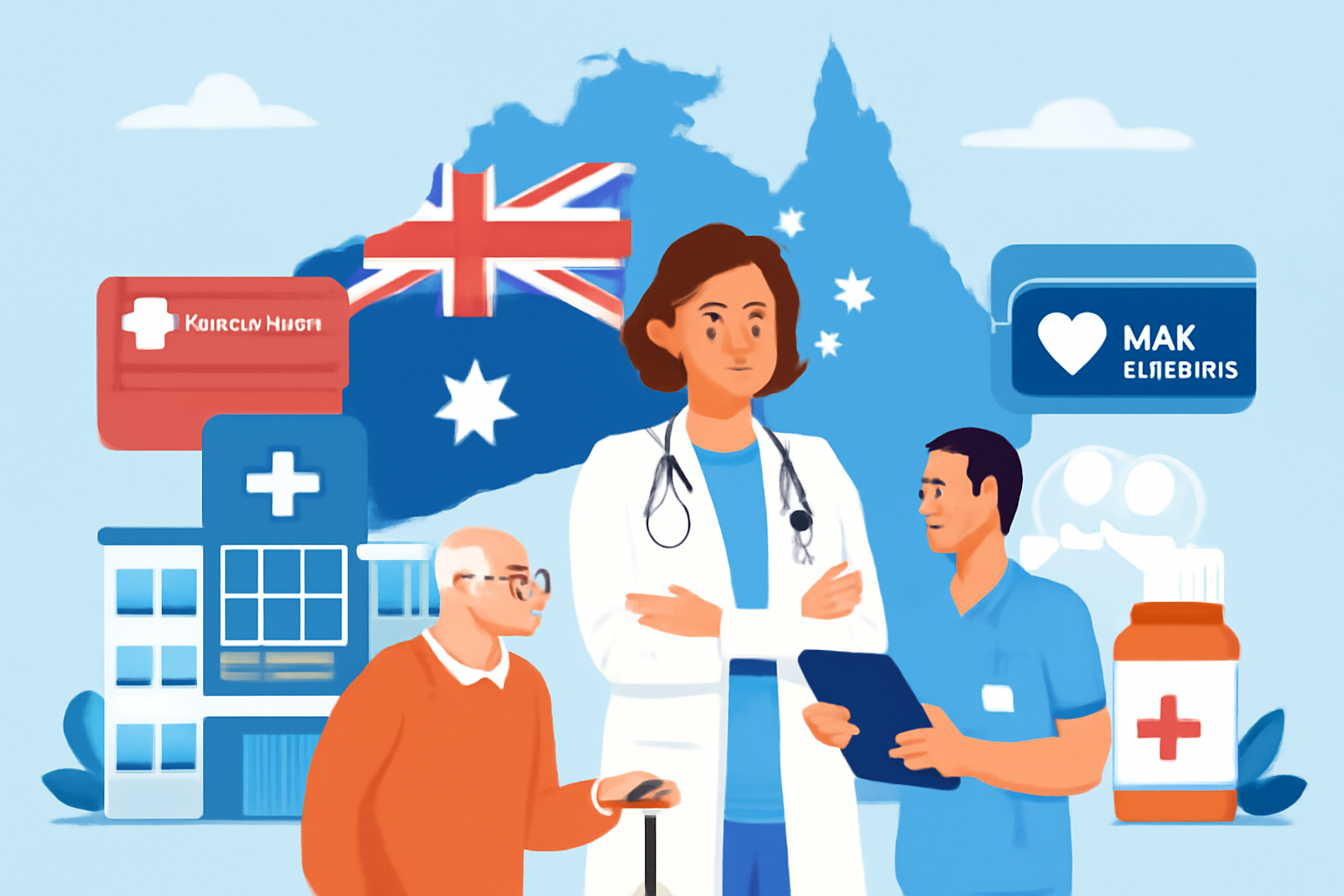
Australia’s healthcare system is often hailed as one of the most effective and equitable models in the world. At its core is Medicare, a universal healthcare program designed to ensure that all Australian citizens and permanent residents can access essential medical services. This system combines public funding, private insurance, and subsidized medications to provide comprehensive care across the country.
The Medicare system, launched in 1984, covers a wide range of healthcare services, including doctor visits, hospital care, and certain medical treatments. Funded through general taxation and a Medicare levy—a small tax paid by individuals based on their income—Medicare makes healthcare affordable by covering much of the cost for patients. This means Australians do not have to pay out-of-pocket for essential services, ensuring that access to healthcare is not determined by one’s financial situation.
While Medicare provides the foundation for healthcare in Australia, many people opt for private health insurance to access additional benefits. Private insurance allows individuals to receive treatment in private hospitals, avoid long waiting times for procedures, and access services such as dental care, physiotherapy, and optometry. The Australian government encourages private insurance by offering rebates, which reduce the cost of premiums for those who decide to take out additional cover. This approach creates a hybrid system that offers a balance between public and private care, ensuring that everyone can access the healthcare they need.
Another key element of the Australian healthcare system is the Pharmaceutical Benefits Scheme (PBS), which subsidizes the cost of prescription medications. Under the PBS, Australians can access essential medicines at a fraction of their market price. This is particularly helpful for individuals with chronic health conditions who need ongoing medication, as it reduces the financial strain associated with long-term treatments.
Australia’s public hospitals are an essential part of the healthcare landscape, providing high-quality medical care to all Australians. These hospitals are funded by the government and offer services such as emergency care, surgery, maternity care, and mental health services at no direct cost to patients. Public hospitals are particularly important in rural and remote regions where access to private facilities may be limited, ensuring that every individual can receive timely medical attention, regardless of their location.
A central feature of Australia’s healthcare system is its emphasis on primary care, typically delivered by general practitioners (GPs). GPs serve as the first point of contact for patients, managing a wide range of health issues, from routine check-ups to the ongoing management of chronic conditions. They also play a critical role in preventing illness by providing regular screenings, vaccinations, and health education. By addressing health issues early on, GPs help reduce the need for more expensive hospital treatments and improve overall health outcomes.
The Australian government also focuses on preventive care to reduce the burden of chronic diseases and improve public health. Public health campaigns and programs targeting lifestyle factors such as smoking, diet, and physical activity help reduce the incidence of preventable conditions like heart disease and cancer. By investing in prevention, the healthcare system not only improves the health of the population but also helps manage long-term healthcare costs.
Despite the successes of the Australian healthcare system, challenges persist. Rising demand due to an aging population and the increasing costs of medical technology pose ongoing challenges for sustainability. However, the system remains one of the best in the world, offering high-quality, affordable healthcare that prioritizes the well-being of all Australians.
