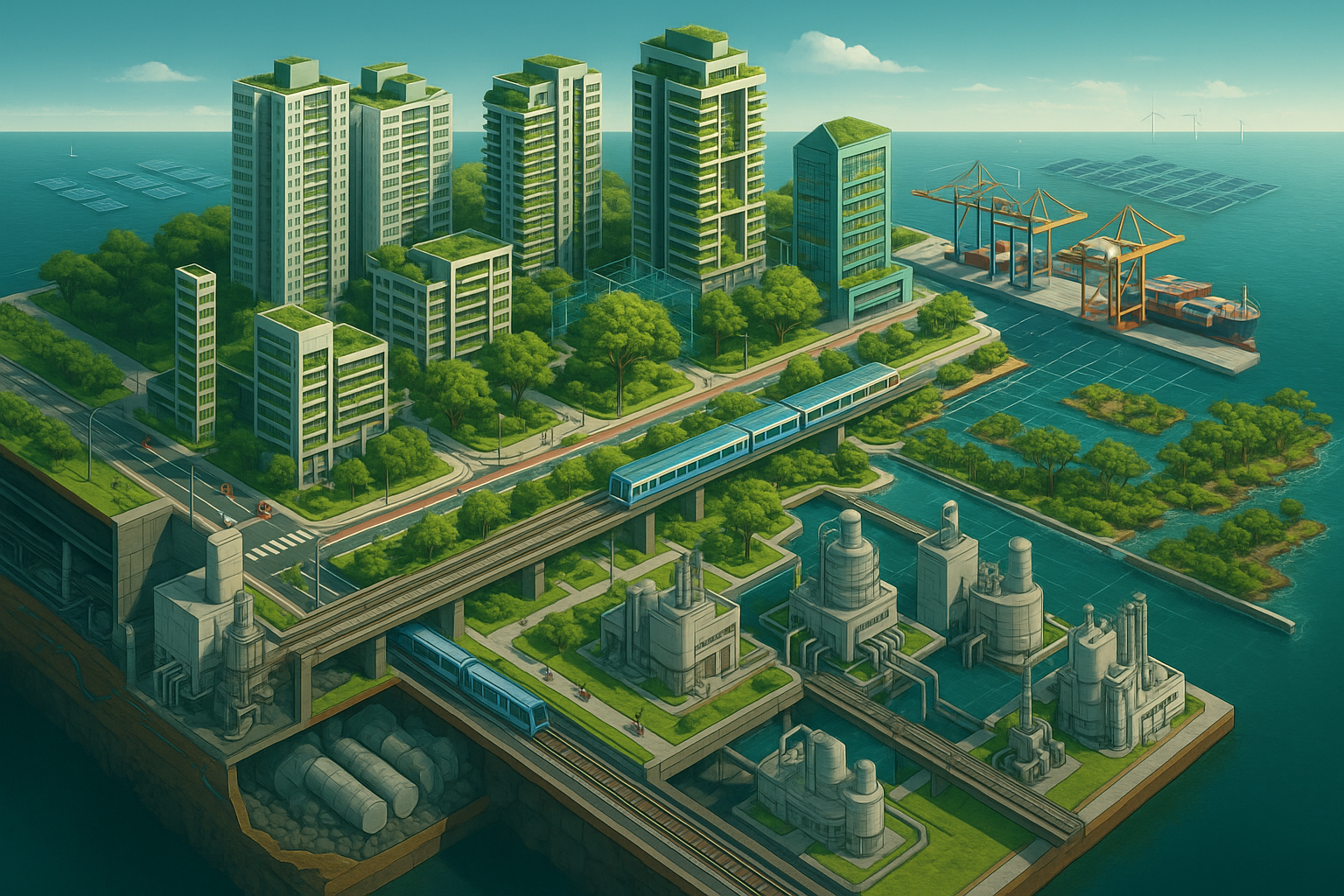
In Singapore, the tension between density and biodiversity is not resolved; it is managed. Precious reserves sit next to expressways; new rail alignments negotiate with forests; and reclaimed coastlines seek ecological function alongside industrial utility. The goal is not a museum of untouched nature, but a network that sustains species, buffers climate risks, and delivers everyday access to green for residents living many floors above the ground.
Heat is the everyday face of climate stress. Dense districts amplify it, so design leans on shade trees, vertical greenery, and porous surfaces that let rain infiltrate and evaporate. Water-sensitive urban design routes stormwater through canals and wetlands that double as public spaces during fair weather. This “blue-green” thinking treats parks and drains as parts of a single system—cooling neighborhoods, reducing flood risk, and giving wildlife stepping stones across the city.
Coastlines are the frontier where land scarcity and climate risk collide. Conventional seawalls are being reconsidered alongside living shores, raised platforms, and controlled polders on outlying areas. These approaches accept that some edges can be re-sculpted to gain safety without losing all ecological value. The calculus is intricate: industrial zones demand hard protection; residential waterfronts favor multi-functional landscapes; sensitive habitats merit careful buffers.
Resource limits push innovation in everyday services. Recycling and waste-to-energy plants reduce landfill demand, while material recovery extends the life of scarce disposal sites. Water recycling has moved from novelty to backbone, cutting vulnerability to drought. Urban farms and food tech cannot replace imports, but they can cushion shocks and shorten some supply chains. The lens is resilience, not self-sufficiency.
Crucially, planners design for co-benefits. A rail line that reduces car dependence also unlocks denser housing near stations and shrinks the city’s energy footprint. A park that cools a district amplifies walking and cycling. Nature-friendly flood measures double as playgrounds. In a small island state, every intervention must work twice: once for its stated purpose, and again for the systems it touches.
