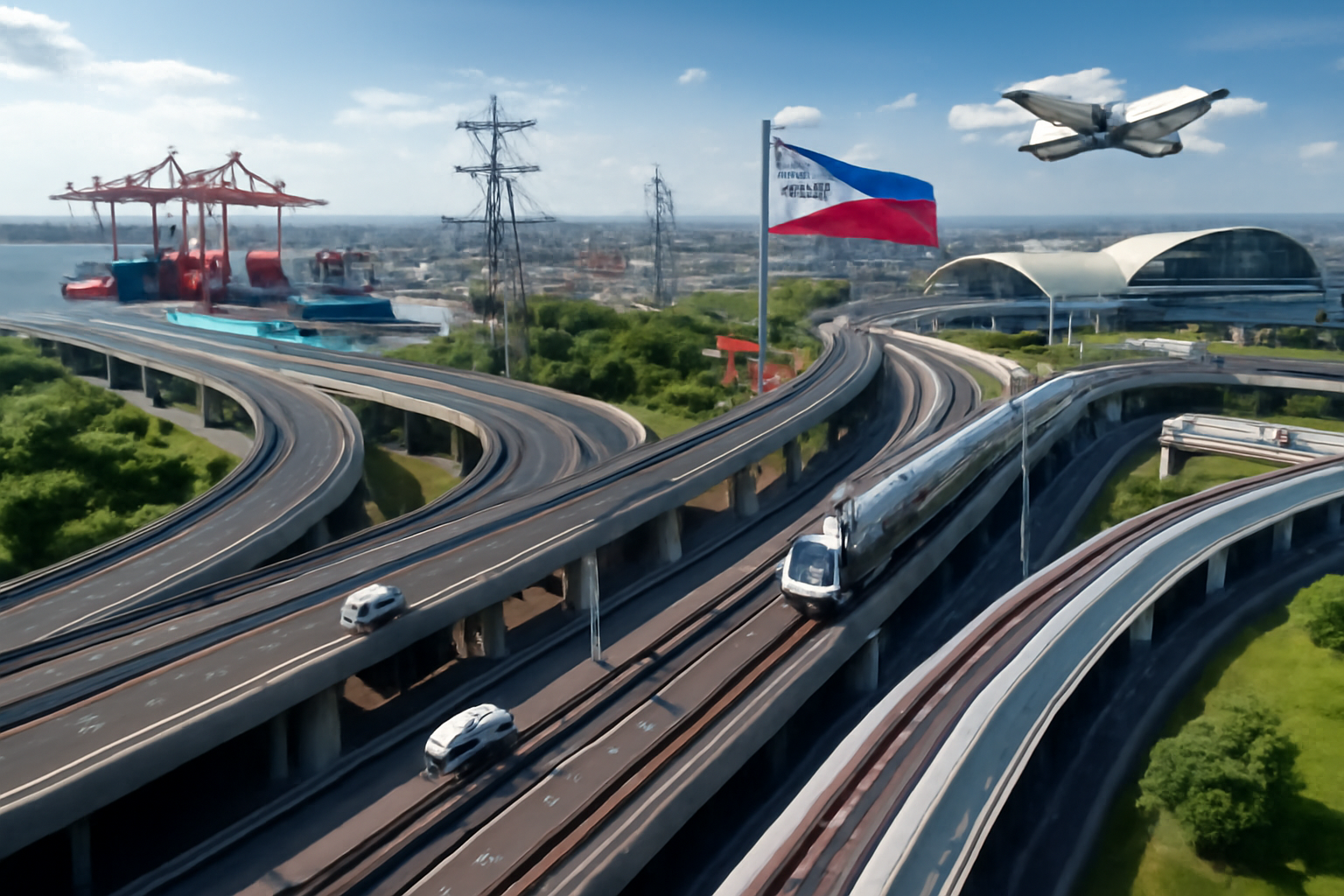
The Philippines is a country made up of thousands of islands, which presents unique challenges when it comes to transportation and communication. To overcome these challenges, the government has undertaken ambitious infrastructure projects aimed at improving connectivity and mobility across the country. Through these efforts, the Philippines hopes to create a more interconnected nation, support economic growth, and enhance the quality of life for its citizens.
Central to the country’s infrastructure goals is the expansion and modernization of its road systems. The Build, Build, Build initiative, launched in 2016, has led to the construction of new highways, bridges, and expressways, which have drastically reduced travel times between key regions. For instance, the Cavite-Laguna Expressway (CALAX) and the Tarlac-Pangasinan-La Union Expressway (TPLEX) have made it easier for both businesses and individuals to travel more efficiently between provinces.
Beyond roads, the development of airports and seaports has been a key focus of the government’s infrastructure push. The modernization of Ninoy Aquino International Airport (NAIA) is among the most visible projects, aiming to accommodate the rising number of travelers and improve passenger experience. Other airports, such as those in Davao, Cebu, and Clark, are also receiving significant upgrades, providing greater connectivity for passengers traveling to and from various regions. The improvements to these airports are critical to facilitating both domestic and international tourism and business exchanges.
Seaport infrastructure has also been a significant area of focus. Major ports such as those in Batangas, Cebu, and Davao are undergoing upgrades to handle larger ships and increase cargo capacity. This is vital for the country’s trade and logistics industries, which rely heavily on maritime transportation. Expanding the capacity of these ports not only supports economic growth but also makes the movement of goods more efficient and cost-effective, benefiting various sectors like agriculture, manufacturing, and retail.
Rail infrastructure is another key component of the country’s infrastructure modernization. The Philippines has long struggled with traffic congestion in Metro Manila, and the development of new rail systems is expected to ease this burden. The ongoing construction of the Metro Manila Subway, which will connect key areas in the capital, is set to provide a reliable and efficient mode of transportation for millions of commuters. Additionally, the North-South Commuter Railway will link Metro Manila to provinces in the northern and southern regions, offering a more sustainable and faster alternative to road transport.
In parallel with these transportation developments, the Philippines is also focusing on enhancing its energy and telecommunications infrastructure. Reliable energy is critical for powering the country’s transportation systems, while expanding internet connectivity ensures that Filipinos have access to information and services in an increasingly digital world. These improvements will help bridge the gap between urban and rural areas, allowing more people to benefit from the country’s growing economy.
Despite the impressive progress, challenges still exist. Traffic congestion continues to be a major issue in Metro Manila, and while infrastructure projects are underway, demand continues to outpace supply. Furthermore, natural disasters like typhoons and earthquakes often disrupt infrastructure, requiring greater emphasis on resilience and adaptability in the face of such challenges.
As the Philippines continues its infrastructure development efforts, these improvements in connectivity and mobility are poised to drive long-term growth, enhance the nation’s economic competitiveness, and improve the quality of life for all Filipinos. With continued investment and strategic planning, the country is on track to become a more connected and integrated nation in the years to come.
