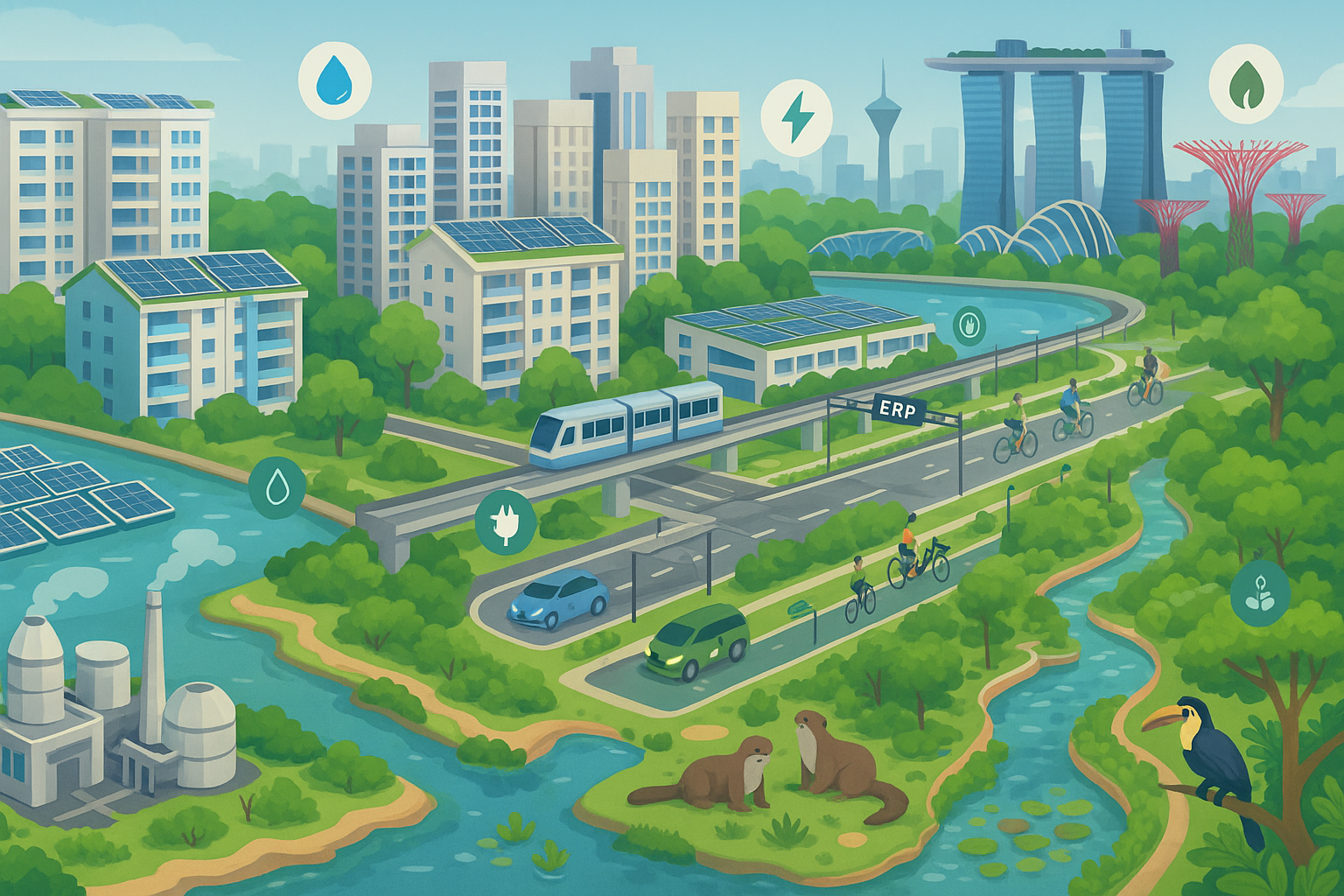
Singapore approaches sustainability as an industrial redesign challenge. The goal is to keep materials, water, and energy cycling at the highest value for as long as possible. This mindset shows up most clearly in the waste‑energy nexus and the way the island handles scarce land.
Consider Semakau, the offshore landfill engineered to minimize leakage and maximize containment. It operates alongside incineration plants that reduce waste volume drastically and recover energy. The next chapter is integrated: Tuas Nexus pairs an advanced waste‑to‑energy facility with the Tuas Water Reclamation Plant. Organic sludges and food waste feed anaerobic digesters, boosting biogas yields; flue gas treatment captures pollutants; and the electricity produced helps power co‑located treatment processes. By sharing utilities and heat, the complex cuts duplication and transportation emissions.
Upstream, the Zero Waste Masterplan pushes on three heavy streams: food, packaging, and e‑waste. Extended producer responsibility makes manufacturers accountable for collection and proper processing, while deposit‑return and take‑back schemes raise recovery rates. Smart bins and analytics help planners map contamination hotspots and adjust outreach.
Industry decarbonization leans on both carrot and stick. The carbon tax sets a predictable price signal, encouraging plants to adopt heat recovery, electrify processes where feasible, and switch to lower‑carbon fuels. Efficiency standards are tightened through energy management requirements and audits. Pilot projects explore hydrogen blends for turbines, low‑carbon aviation fuels at Changi, and carbon capture for industrial exhausts. Meanwhile, the grid pursues more low‑carbon imports and large‑scale energy storage to smooth solar variability.
Buildings form a second industrial frontier. The Green Mark scheme has evolved from efficiency checklists to performance‑based ratings that account for embodied carbon. Developers experiment with mass engineered timber, precast components to reduce waste, and façade systems that balance daylight with thermal comfort. Digital twins and commissioning analytics keep HVAC systems tuned, cutting recurring emissions often missed after handover.
Logistics and mobility reforms dovetail with circularity. Electronic Road Pricing manages demand; urban consolidation centers trim delivery trips; and electrified last‑mile fleets slash diesel particulates in dense neighborhoods. Public transit investments anchor mode shifts, while rail expansions interlock with mixed‑use planning to shorten commutes.
Finance and disclosure make the engine run. A green taxonomy, sustainability‑linked loans, and mandatory climate reporting for large firms steer capital toward credible reductions, not green gloss. Incubators and testbeds give startups real‑world sandboxes, from materials tracking with blockchain to AI‑enabled sorting lines.
The outcome is a pragmatic circular economy: fewer trucks to landfills, more electrons captured from waste heat, better buildings that sip rather than gulp energy, and industries nudged by price and policy to reinvent their processes. On a land‑scarce island, circularity is not a slogan—it’s survival engineering.
