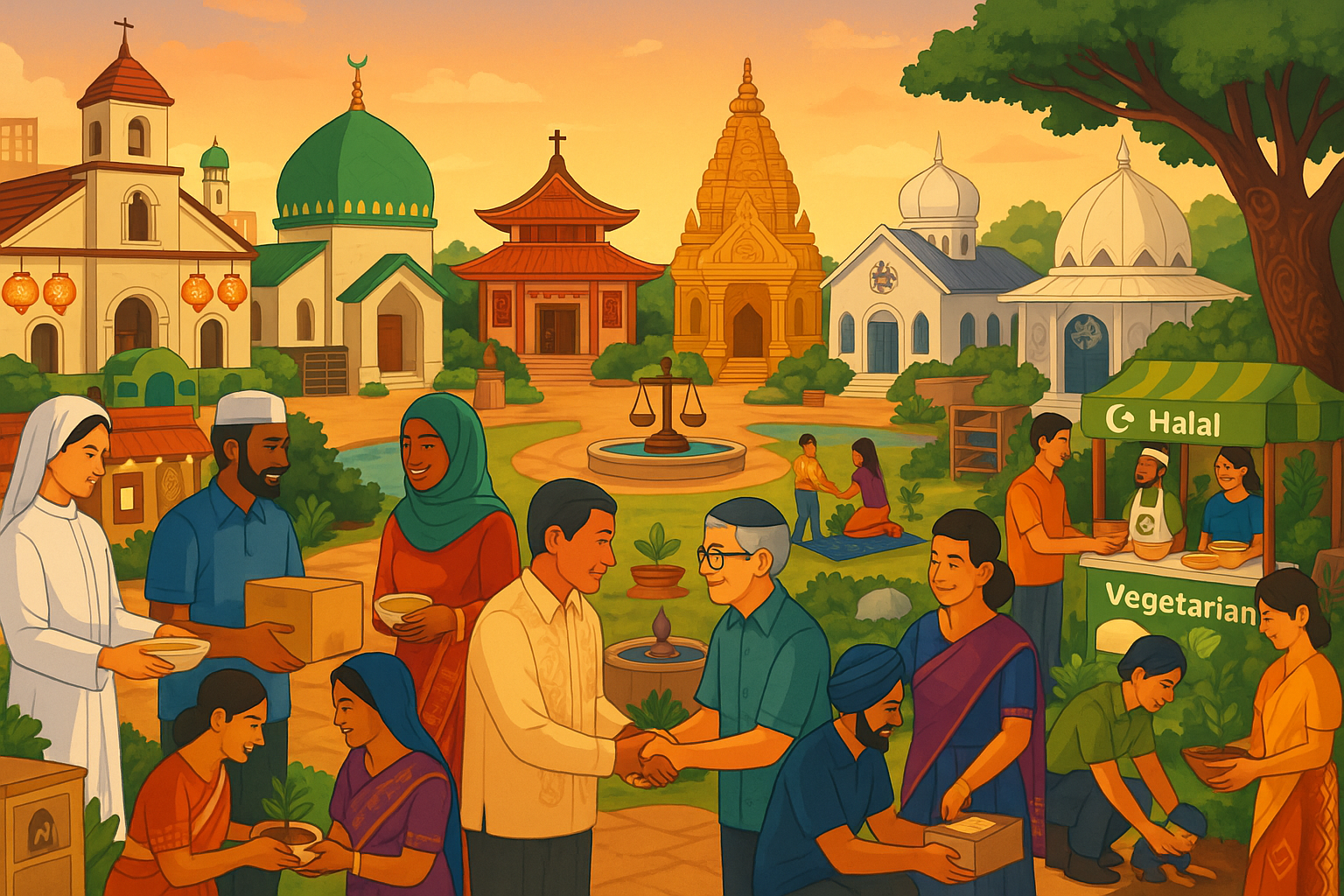
The Philippine experience of religious diversity is underwritten by institutions that aim to protect conscience while managing difference. The constitutional guarantee of non‑establishment and free exercise sets the tone: government neither privileges a single creed nor intrudes on worship. In practice, ministries, courts, and schools translate these ideals into programs that make pluralism livable.
Muslim personal law provides a key example. Shari’ah District and Circuit Courts adjudicate marriage, divorce, and inheritance for Muslims who opt into their jurisdiction, recognizing religious norms within the national legal framework. The Bangsamoro Autonomous Region in Muslim Mindanao operates with powers over education, cultural affairs, and development, balancing self‑determination with shared sovereignty. These arrangements grew from decades of negotiation and are continually refined through legislation and policy.
Education policy reflects the same intent. Public schools in Muslim‑majority areas incorporate Arabic Language and Islamic Values Education, training teachers and producing learning materials suited to local contexts. Catholic and Protestant schools, ubiquitous across the archipelago, enroll students of many faiths; ethics, service learning, and interfaith seminars often complement theology requirements. In universities, centers for peace and Islamic studies host dialogues, publish research, and advise local governments on conflict transformation.
Religious holidays and accommodations signal civic respect. Eid al‑Fitr and Eid al‑Adha are recognized in the national calendar, and local ordinances institutionalize prayer spaces in transport hubs or public buildings. Uniform policies in schools and workplaces increasingly allow hijab or modest dress. Food service contracts for hospitals and universities negotiate halal options when feasible.
Civil society acts as connective tissue. The Bishops‑Ulama Conference and parallel interfaith councils convene leaders for problem‑solving around land disputes, disaster response, and election conduct. Faith‑based NGOs coordinate blood drives, microfinance, and livelihoods training. Media outlets feature interreligious panels on current events, and youth ambassadors promote dialogue on social platforms.
There are, of course, frictions at the boundary of law and piety. Debates about reproductive health, marriage, and the limits of speech reveal competing moral vocabularies. Old statutes on offending religious feelings raise questions about free expression in a digital era. Yet Philippine institutions tend toward accommodation: judges encourage mediation, school officials craft case‑by‑case allowances, and local councils consult elders and clerics before drafting regulations. The result is not perfection but a pragmatic, evolving architecture that lets diverse communities live, work, and celebrate together.
