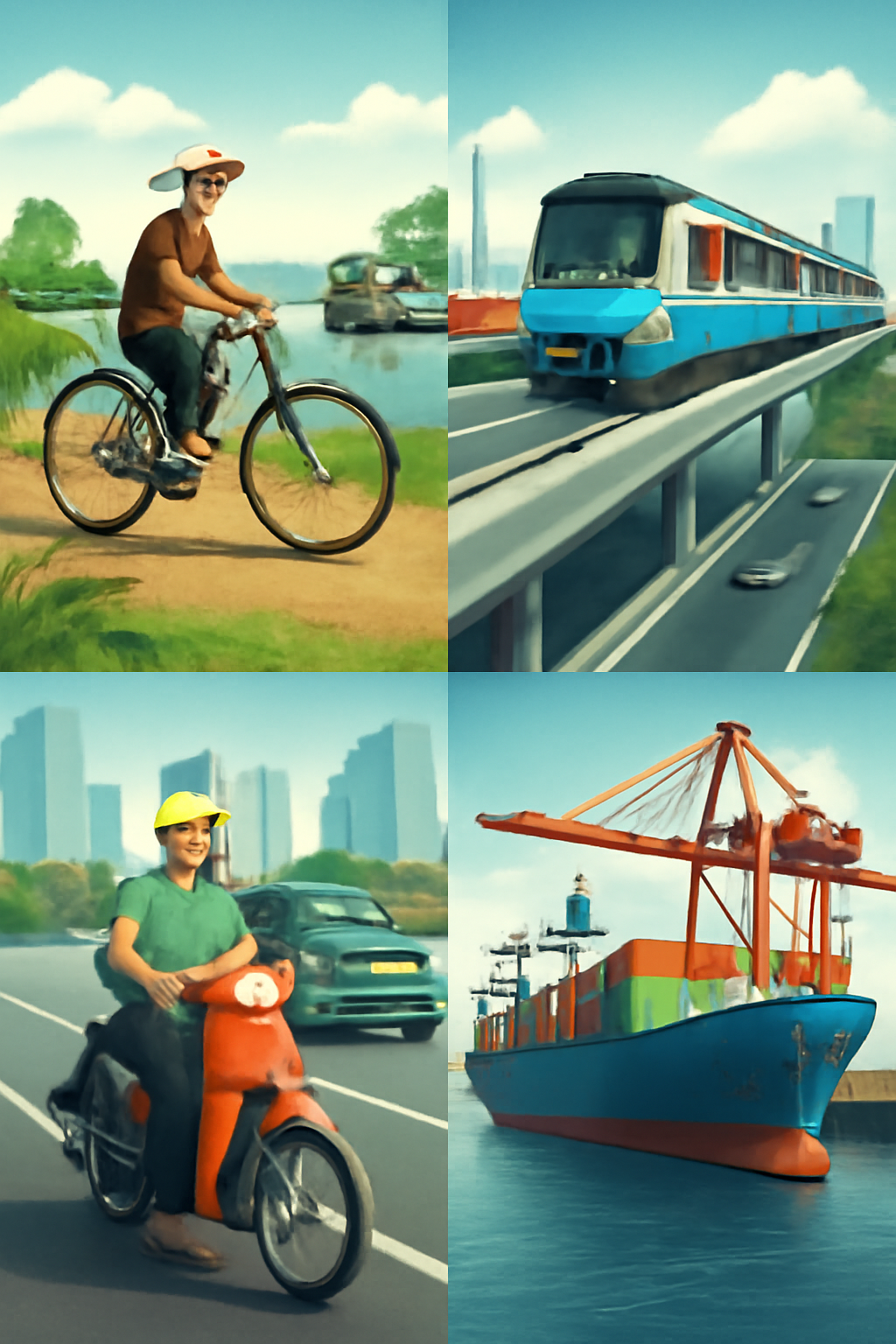
Transportation in Vietnam has undergone significant changes in recent decades, moving from a reliance on traditional and limited forms of transport to a more modern, diverse, and efficient system. This transformation is not only a reflection of Vietnam’s economic progress but also of the government’s deliberate efforts to integrate better infrastructure, urban mobility solutions, and sustainable transport methods.
In the early years following the end of the Vietnam War, transportation was underdeveloped, with limited road networks and a focus on small-scale transport like bicycles, rickshaws, and boats. While rural areas still relied heavily on waterways, urban centers like Hanoi and Ho Chi Minh City were primarily served by basic roadways and a limited number of buses.
With the onset of Vietnam’s economic reforms in the 1980s, the government started focusing on modernizing the country’s transportation sector. Roads were paved, and major highways connecting key cities such as Hanoi and Ho Chi Minh City were constructed. This helped to spur economic activity, especially in trade and commerce. The motorbike quickly became the most popular form of transport due to its affordability, flexibility, and ability to navigate through the increasingly crowded streets.
As Vietnam’s population continued to grow, the pressure on the transportation network increased. In response, the government began investing in the modernization of both urban and intercity transport. Public transport, including buses, underwent upgrades, and the introduction of new expressways helped to alleviate congestion and reduce travel time.
Perhaps the most notable development in Vietnam’s transportation infrastructure has been the introduction of metro systems in major cities. The Hanoi Metro began operations in 2021, and the Ho Chi Minh City Metro is expected to follow in the near future. These metro lines are part of an effort to reduce road congestion, improve air quality, and provide a more sustainable solution for urban mobility.
Another critical development has been the rise of ride-sharing services, such as Grab, which have disrupted traditional forms of transport. These services provide an affordable, convenient, and efficient way to navigate the cities, especially in areas with heavy traffic. They also help to reduce reliance on private cars, contributing to a reduction in traffic congestion.
Looking ahead, Vietnam’s transportation system is poised for further advancements with the development of high-speed rail networks, more airports, and expansion of urban transport systems. These changes will play a crucial role in ensuring the country can accommodate its growing population while minimizing environmental impact and promoting sustainable development.
