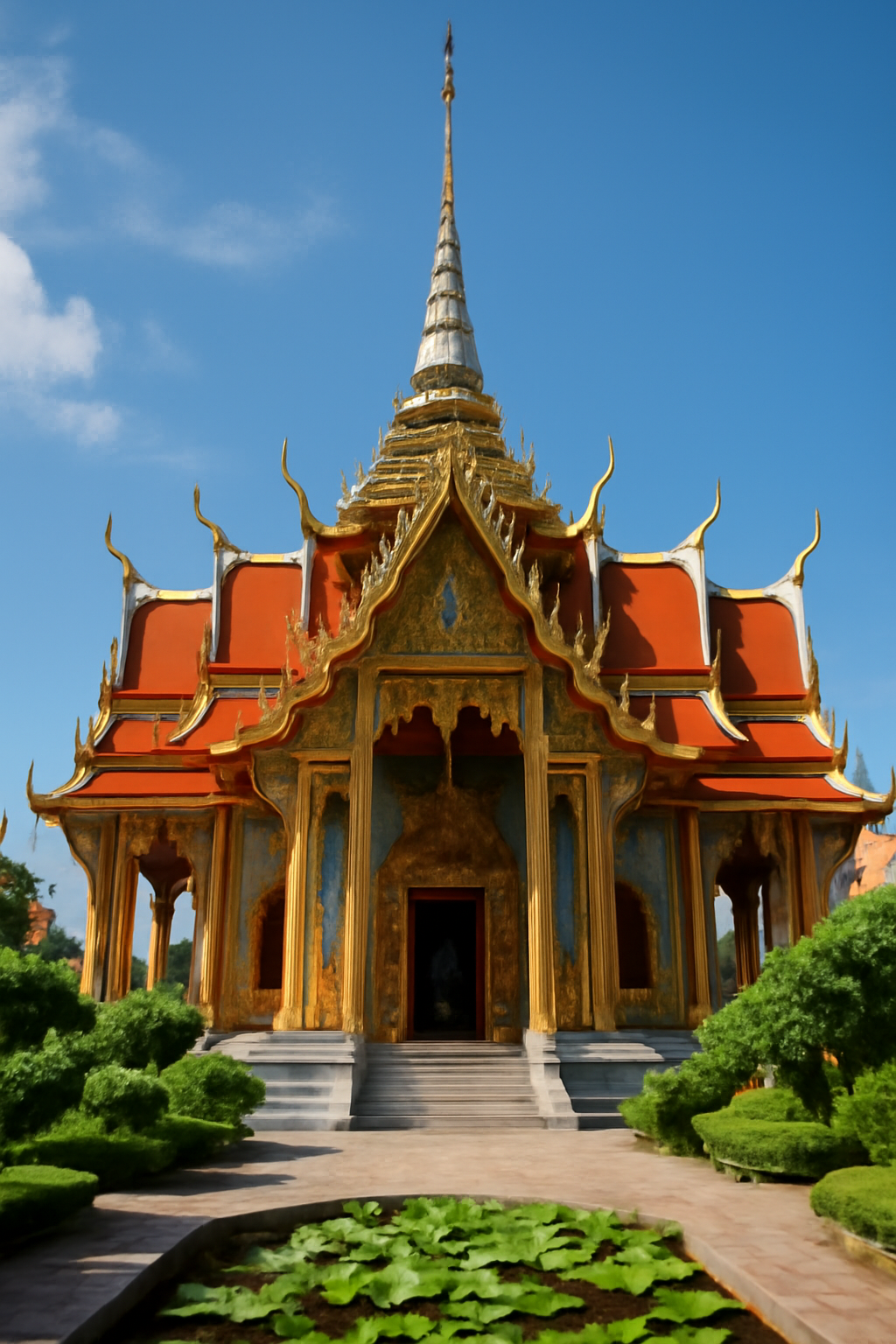
The architectural wonders of Thailand’s temples, known as wat, are emblematic of the country’s deep-rooted Buddhist traditions. With their intricate design, elaborate details, and spiritual symbolism, these temples are more than just places of religious worship; they serve as physical representations of Buddhist philosophy, art, and culture. The design and construction of these temples are infused with layers of meaning, and every aspect is intentionally crafted to reflect divine ideals and guide worshippers on their spiritual journey.
The central spire or prang of a Thai temple is one of its most iconic features. This towering structure, which rises dramatically above the rest of the temple complex, symbolizes Mount Meru, the center of the universe in Buddhist cosmology. The prang often boasts detailed carvings, golden accents, and intricate mosaics that reflect the divine nature of the temple. The spire serves not only as a visual focal point but also as a reminder of the Buddha’s path to enlightenment, with its height symbolizing the upward journey toward spiritual awakening.
In addition to the prang, the vihara, or main hall, is another key architectural element of Thai temples. The vihara serves as the primary space for worship and meditation, and it often houses statues of the Buddha in various poses, each representing different aspects of his life and teachings. The walls of the vihara are typically adorned with murals that depict stories from the Buddha’s life, such as his birth, enlightenment, and the teachings he imparted to his followers. These murals not only offer visitors an opportunity to reflect on Buddhist teachings but also serve as educational tools, providing a visual guide to the principles of Buddhism.
The roof design of Thai temples is another distinct characteristic. Most Thai temple roofs are designed with a gentle curve, often in multiple tiers, symbolizing the petals of a lotus flower. The lotus, a symbol of purity and spiritual enlightenment, plays a significant role in Buddhist imagery, and the roof design captures this symbolism. The use of vibrant colors and gold embellishments further enhances the beauty and spiritual aura of the temple.
Thai temples are also known for their use of gold, which is often applied to statues, carvings, and other architectural elements. Gold is associated with purity, divinity, and enlightenment in Buddhist belief, and its use in temples serves as a reminder of the radiant light of the Buddha. The gold-leafed Buddha statues are especially notable, as they are considered sacred and represent the divine presence of the Buddha.
The temple grounds are often surrounded by lush gardens, reflecting the Buddhist belief in harmony between nature and spirituality. Ponds, trees, and flowers create a tranquil environment where visitors can meditate, contemplate, and connect with the divine. The landscape surrounding the temple is intentionally designed to create a sense of peace and serenity, encouraging individuals to pause and reflect on their spiritual path.
Every element of Thai temple architecture serves a purpose, both in its symbolic meaning and its aesthetic appeal. The stunning design of these temples not only creates an atmosphere of reverence and awe but also provides a physical space for worshippers to connect with the spiritual realm. The temples stand as lasting symbols of Thailand’s cultural and religious heritage, offering visitors an opportunity to experience the beauty and depth of Buddhist teachings through art and architecture.
