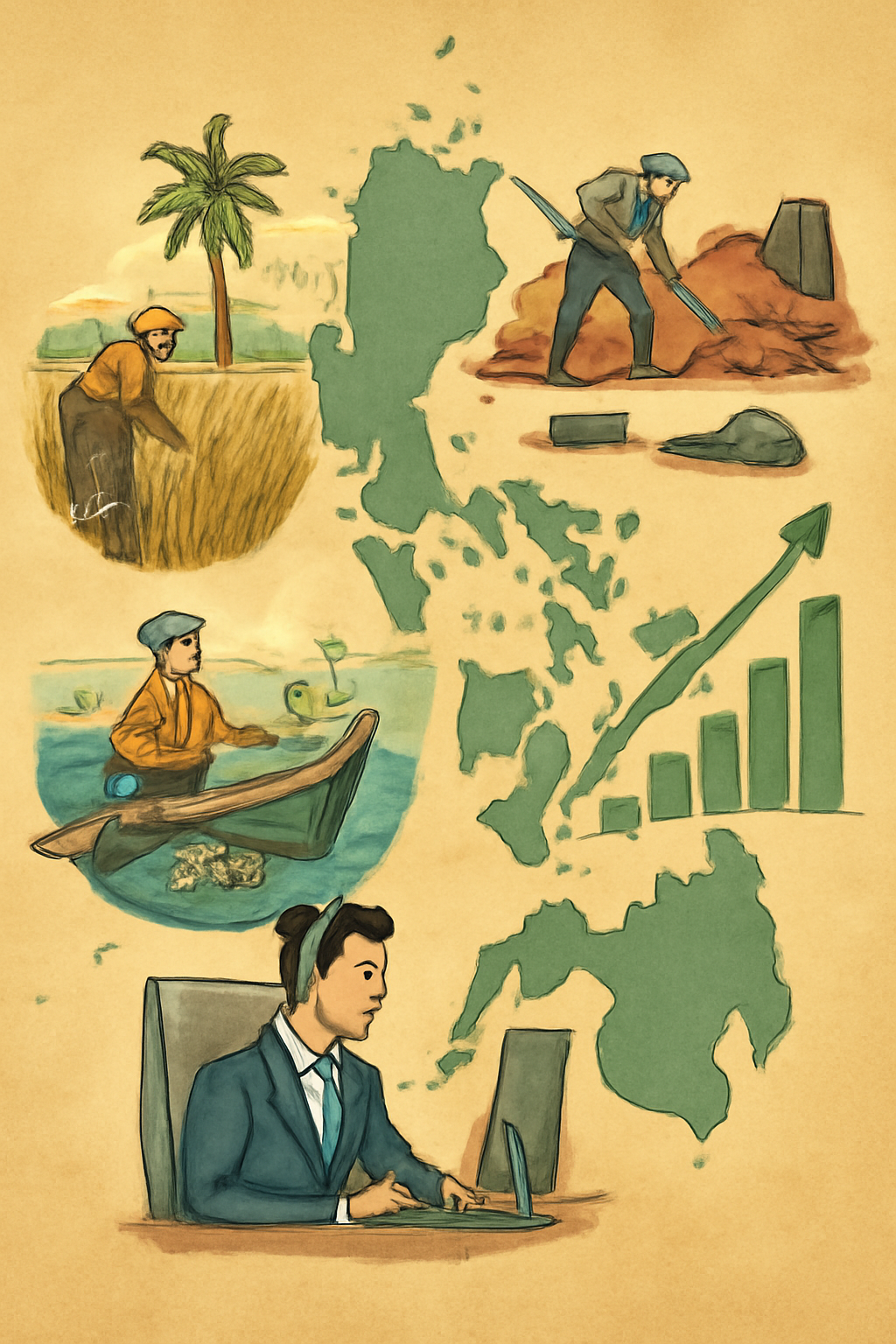
The Philippine economy has been a study in resilience, with natural resources playing a significant role in its growth. Situated along the Pacific Ring of Fire, the country is endowed with a wide array of mineral resources, agricultural products, and marine life that have shaped the country’s economic landscape. Over the years, the Philippines has capitalized on its natural wealth, but it also faces challenges related to sustainability and equitable development.
Mineral resources are central to the economy of the Philippines. The country is one of the world’s top producers of nickel, with large reserves of copper and gold as well. Mining has been a key economic activity, contributing to export revenue and job creation. However, the industry has faced challenges such as fluctuating global commodity prices and concerns about the environmental impact of mining operations. The government has introduced policies to balance economic benefits with environmental conservation, but enforcement of regulations remains a challenge.
In addition to minerals, the Philippines is a major agricultural producer. The country is known for its coconut industry, as well as the cultivation of rice, sugar, and tropical fruits. The agricultural sector is vital not only for domestic food security but also for export markets. However, agriculture faces challenges from climate change, soil degradation, and outdated farming practices. The government has focused on modernizing the sector and investing in climate-resilient agricultural practices to ensure food security and boost exports.
The Philippines is also a key player in the global fishing industry, thanks to its vast territorial waters. Fish and seafood are integral to Filipino culture and cuisine, and the fishing industry provides livelihoods for millions of Filipinos. However, overfishing, pollution, and habitat destruction are pressing concerns. Sustainable fishing practices and marine conservation are critical for preserving this valuable resource for future generations.
Tourism is another growing sector that benefits from the country’s natural resources. The Philippines is renowned for its stunning beaches, coral reefs, and biodiversity, making it a popular destination for tourists. The tourism industry contributes significantly to GDP and provides numerous job opportunities. However, overdevelopment and environmental degradation in certain areas pose threats to the sustainability of tourism.
The Philippines’ natural resources have been fundamental to its economic growth, but the country must ensure that development is sustainable and inclusive. Policies that promote environmental sustainability, improve resource management, and ensure equitable distribution of economic gains are essential for long-term prosperity.
