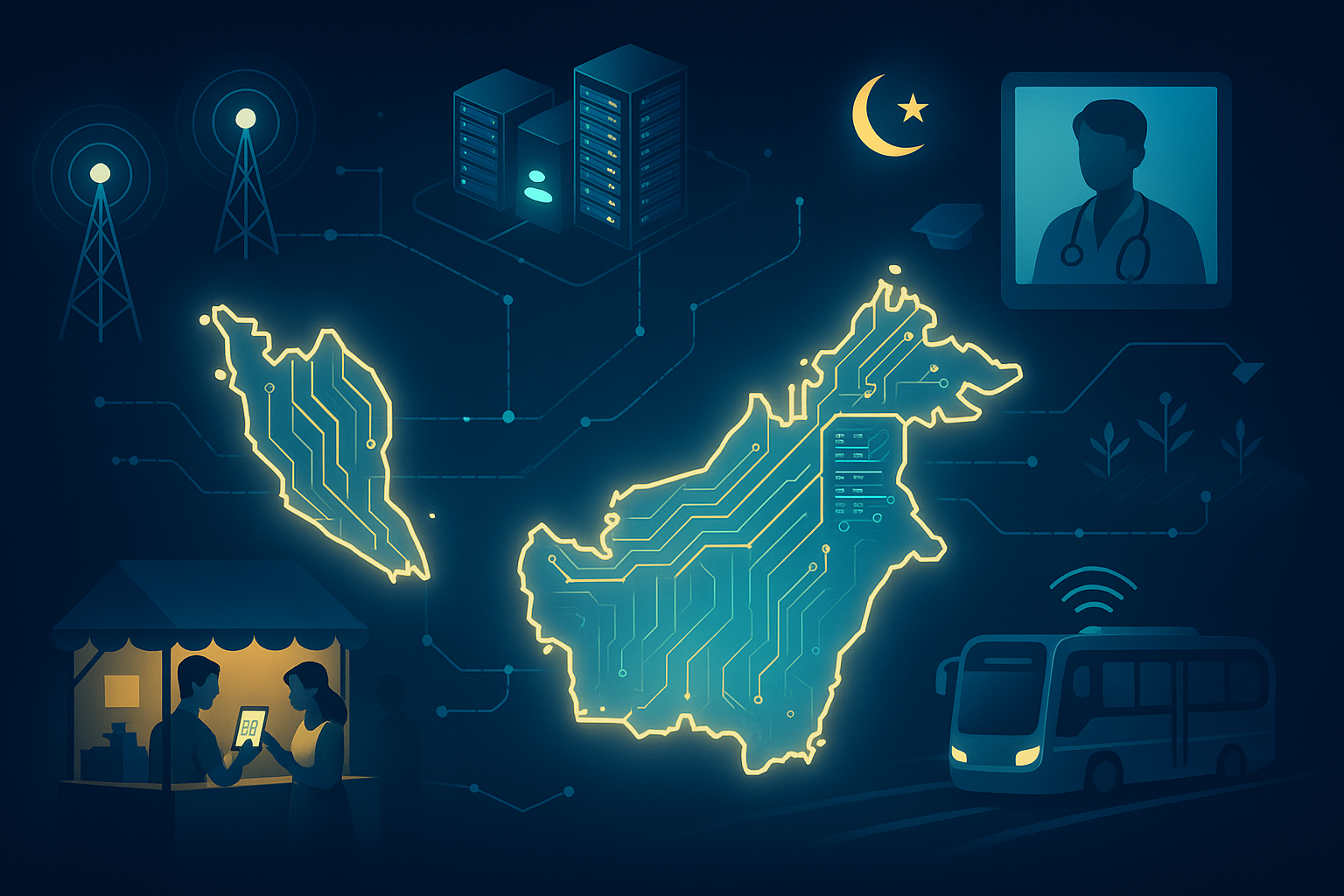
A thriving digital economy is ultimately a social project. Malaysia’s push to digitize finance, commerce, and public services will succeed only if people can access, trust, and benefit from the new systems. That means reliable connectivity, affordable devices, intuitive services, and continuous learning pathways for every segment of society.
First, connectivity must reach the last mile. Rural fiber expansion and 4G/5G coverage address the physical gap, but affordability and device availability matter just as much. Community internet centers, shared devices in schools, and targeted subsidies can prevent digital exclusion among lower-income households and older citizens. Accessibility features—voice interfaces, font adjustments, multilingual options—turn availability into usability.
Digital identity and payments provide the foundation for inclusion. With a secure ID layer and interoperable payment rails, citizens can open accounts, receive benefits, and transact with small merchants. For micro-entrepreneurs—hawkers, gig workers, home-based businesses—e-wallets and instant transfers reduce the need for cash float and enable savings and micro-insurance products. These same rails facilitate government-to-person transfers, cutting leakage and shortening delivery times for social assistance.
Education and skills are the long-term levers. Core digital literacy should start early: safe browsing, password hygiene, basic coding logic, and media discernment. Technical and vocational education and training (TVET) programs can emphasize practical skills—network setup, cloud administration, UI/UX, and data visualization—while university programs expand into AI, cybersecurity, and product management. Micro-credentials and short bootcamps enable mid-career transitions, reducing the risk that automation displaces workers without alternatives.
Gender and youth participation magnify impact. Initiatives that support women founders with mentorship, market access, and childcare flexibility can unlock latent entrepreneurship. Youth programs tied to apprenticeships and startup internships create practical pathways into the tech ecosystem. When combined with regional startup hubs and accelerators, these efforts seed a pipeline of local talent that stays and builds.
Trust is non-negotiable. Clear data protection rules, simple consent mechanisms, and recourse channels encourage citizens to try digital services. Public communication—plain-language explainers, scam awareness campaigns, and transparent incident reporting—helps maintain confidence when problems arise.
The broader payoff is societal resilience. A digitally included population can access telehealth when clinics are far, learn remotely during disruptions, and find gig opportunities when the labor market shifts. By embedding inclusion into the digital agenda—rather than treating it as an afterthought—Malaysia cultivates a future economy where growth is diffused, opportunity is wider, and technology earns its social license.
