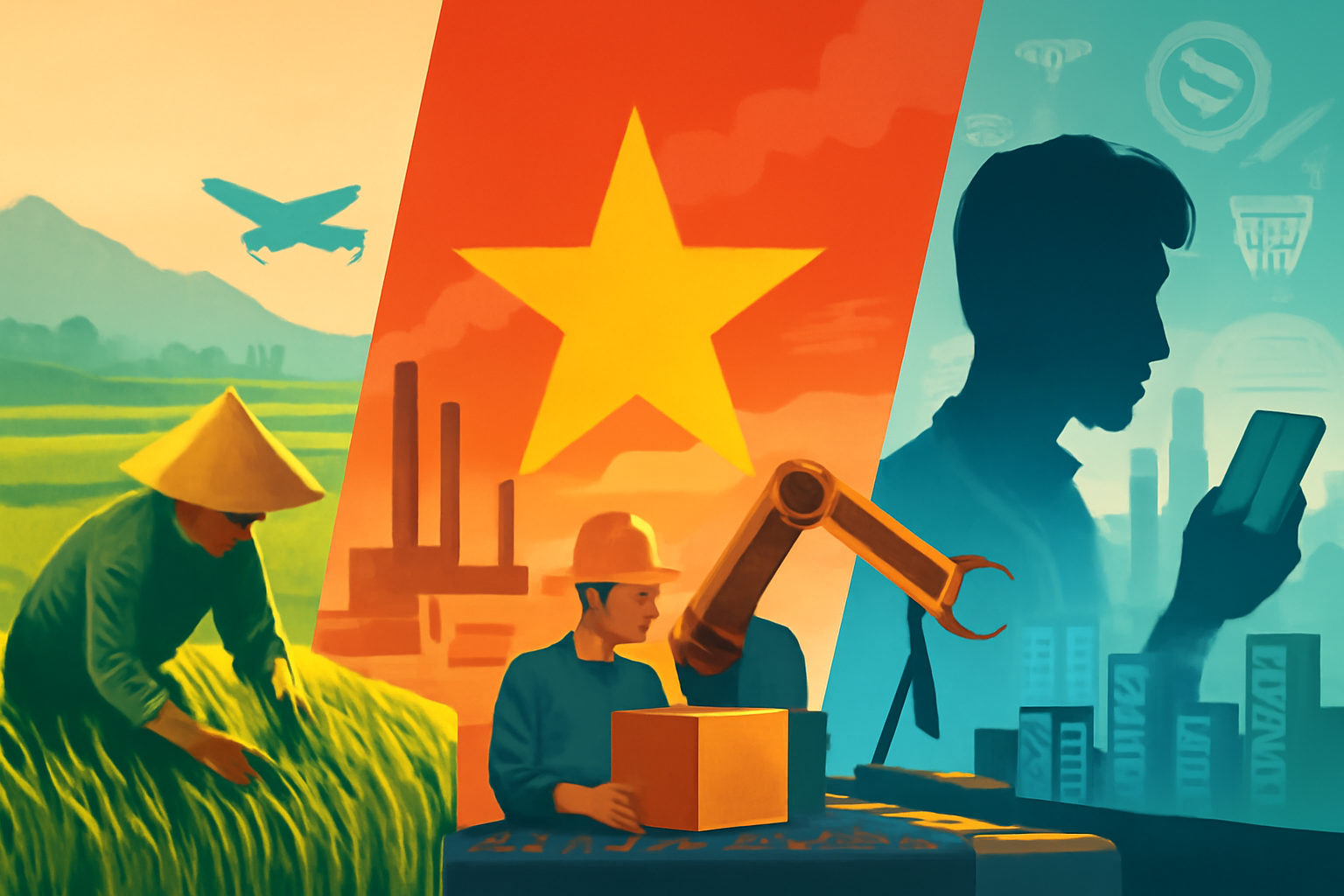
Vietnam’s economic story is one of resilience and transformation. From an economy rooted in agriculture to one that is now thriving in industry and technological innovation, the country’s journey is both impressive and instructive. Vietnam’s rapid economic development is a testament to the nation’s ability to adapt and embrace change in an increasingly globalized world.
Agricultural Roots: The Economic Backbone
For centuries, Vietnam’s economy was based primarily on agriculture. Rice, as the primary crop, dominated the country’s agricultural output and was vital for both domestic consumption and export. Other crops, such as coffee and rubber, also contributed significantly to the nation’s economy. In the past, the agricultural sector was not just the economic backbone but also provided employment for a large portion of the population.
However, as global economic dynamics shifted, Vietnam recognized the need to diversify its economy to maintain sustainable growth. The introduction of economic reforms in the late 1980s, particularly the “Đổi Mới” policies, were key in initiating this transition. These reforms emphasized market-oriented approaches to agriculture, and they allowed the private sector to flourish. They also paved the way for the country’s diversification into other sectors.
The Industrial Leap: Embracing Manufacturing and Production
Vietnam’s industrialization began in earnest in the 1990s, spurred by an influx of foreign direct investment (FDI) and the liberalization of trade policies. The country’s strategic location in Southeast Asia, combined with low labor costs, made it an attractive destination for multinational corporations seeking efficient manufacturing bases. As a result, Vietnam became a manufacturing hub for industries such as textiles, electronics, and automotive production.
One of the key success stories in Vietnam’s industrial growth is its booming electronics sector. Companies like Samsung and Intel have made significant investments in the country, setting up state-of-the-art factories and contributing to Vietnam’s position as a major player in the global electronics supply chain. The manufacturing sector’s growth not only contributed to GDP but also created millions of jobs, further fueling the country’s rapid development.
Vietnam’s Digital Revolution: Pioneering Technological Innovation
The last decade has seen Vietnam emerge as a digital and technological innovation hub. The government has taken a proactive role in fostering the tech sector, offering incentives for startups and investing in digital infrastructure. This commitment to technology has led to the rapid development of e-commerce, fintech, and software development industries.
Vietnam’s young population, well-versed in technology, has been a driving force behind this transformation. The rise of digital platforms like MoMo (a mobile wallet service) and Tiki (an e-commerce giant) are prime examples of how local innovation is reshaping Vietnam’s economy. Additionally, government-backed initiatives, such as the National Digital Transformation Program, are paving the way for further digital growth.
The Path Forward: Challenges and Prospects
While Vietnam’s economic transformation is impressive, it is not without challenges. The country needs to continue investing in education and skills development to ensure a workforce capable of meeting the demands of a high-tech economy. Moreover, the nation’s infrastructure, including transportation and energy, must keep pace with its growing industrial and technological sectors.
Nevertheless, Vietnam’s strategic focus on innovation, manufacturing, and technology offers significant opportunities. The continued growth of these sectors will likely position Vietnam as a key economic powerhouse in the Asia-Pacific region.
