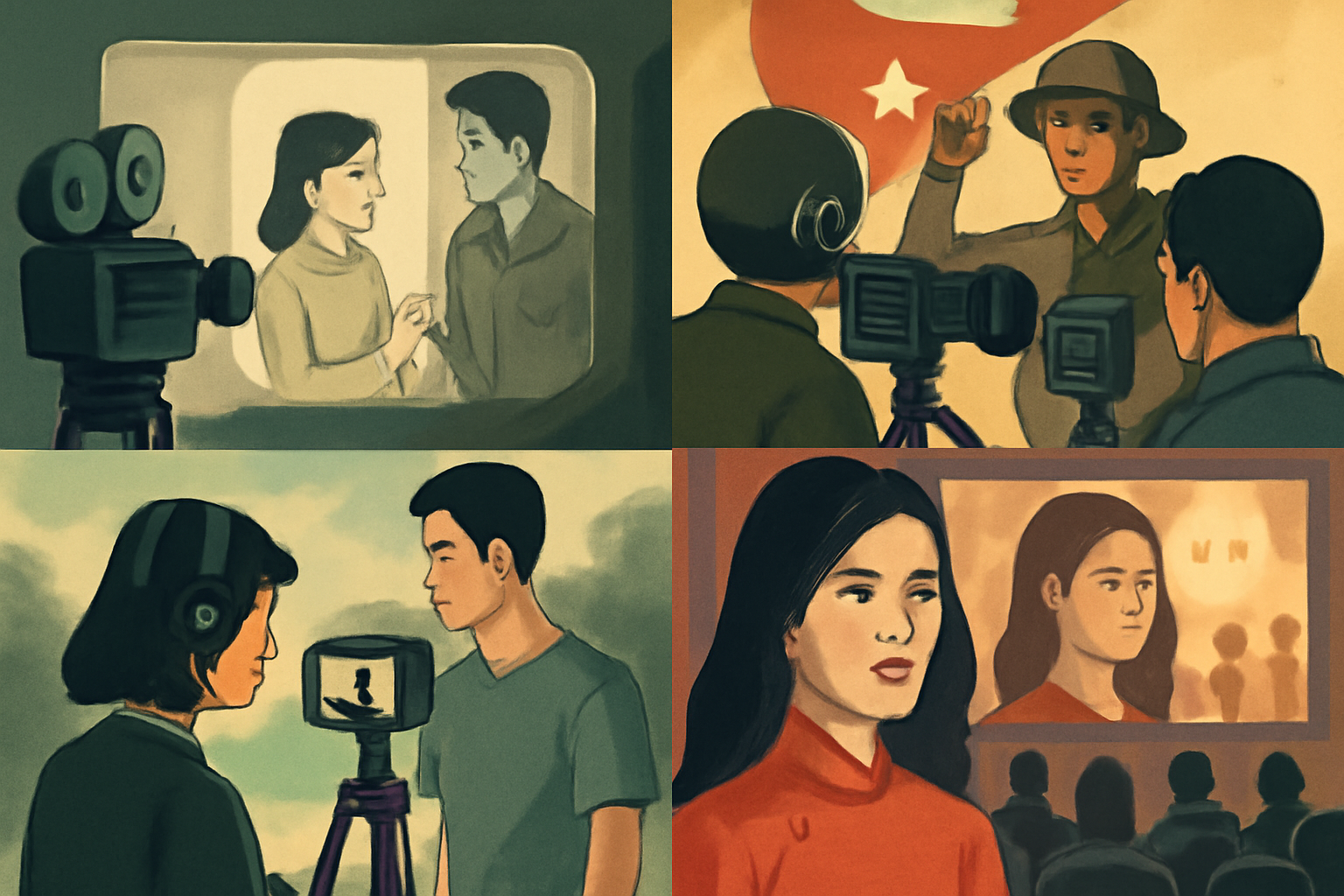
Vietnam’s film industry has undergone dramatic changes throughout its history, evolving from the early days of colonial influence to becoming a notable player in global cinema. The country’s rich cinematic journey is a reflection of its tumultuous history, political shifts, and evolving cultural identity.
The French Colonial Era: Early Cinematic Influence
Vietnamese cinema’s roots can be traced back to the early 20th century during French colonization. While the French brought cinema to Vietnam, it was primarily foreign films that dominated the early years. It wasn’t until the 1920s that the first attempts at local filmmaking began to emerge, with Chung Tuong marking one of the first feature films produced in Vietnam. Early films often focused on social and political themes, highlighting the struggles of ordinary people under French colonial rule.
Post-War Cinema: Socialist Realism and Government Control
After the end of the Vietnam War in 1975, Vietnam was reunified under a communist government. The film industry became largely state-controlled, and the government used cinema as a tool for promoting socialist values and national unity. Films produced during this period followed the principles of socialist realism, emphasizing themes of collective struggle, patriotism, and the achievements of the communist regime.
While these films were widely circulated and state-funded, the restrictive environment limited creativity and stifled the diversity of stories that could be told. Filmmakers had to navigate the constraints of government regulations, and the industry struggled to develop a distinct cinematic voice during this period.
The Modern Renaissance: Growth and Global Recognition
The 1990s marked a turning point for Vietnamese cinema, largely due to the Đổi Mới economic reforms. These reforms allowed for greater creative freedom, which led to an explosion of new voices and innovative filmmaking. Filmmakers began experimenting with different genres, from historical epics to contemporary thrillers, and Vietnamese cinema began to gain international recognition.
Films such as The Third Wife (2018) and Furie (2019) showcased the ability of Vietnamese filmmakers to create compelling stories that resonated on a global scale. The rise of digital filmmaking and lower production costs has made it easier for independent filmmakers to bring their visions to life, contributing to a more diverse and vibrant film landscape.
