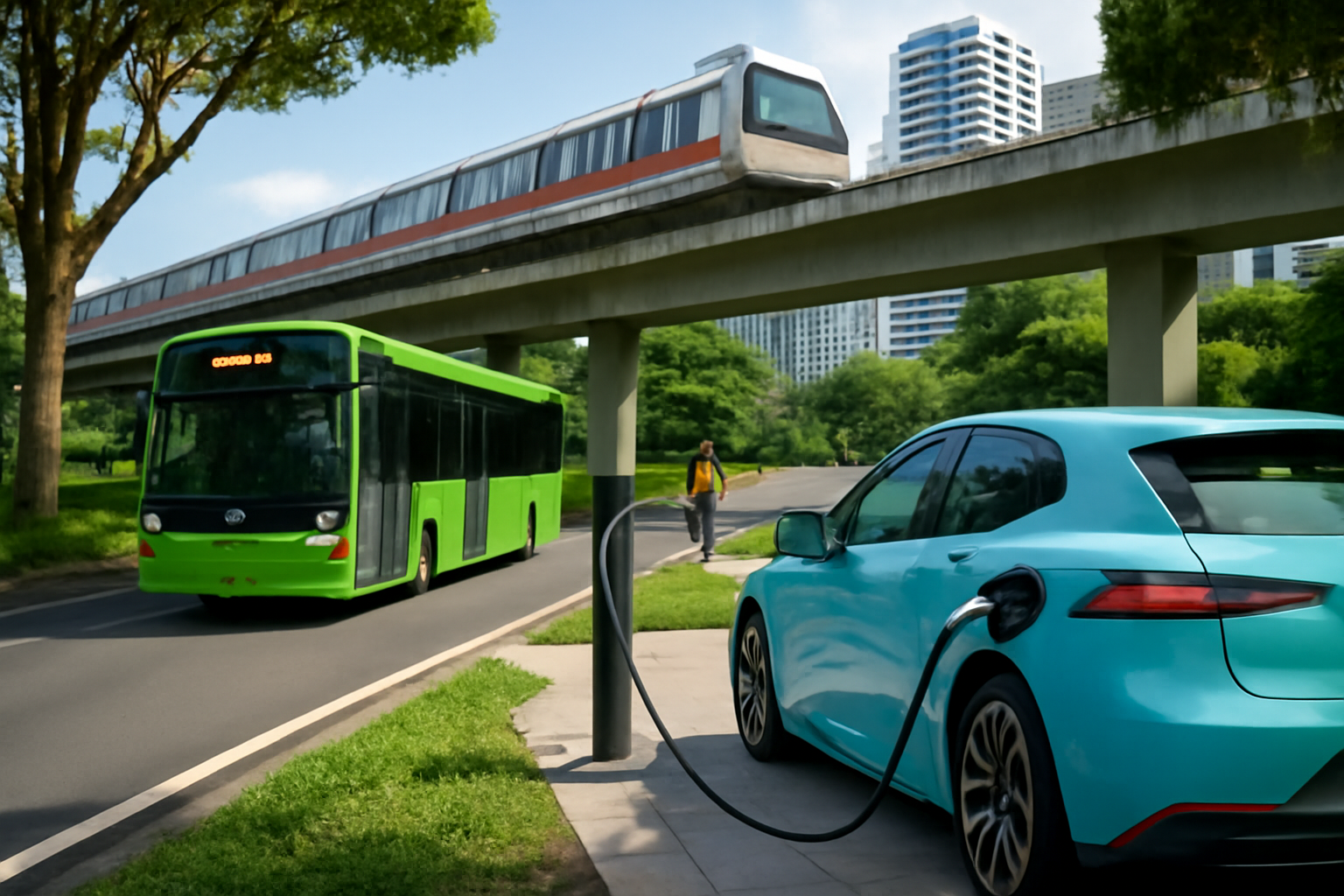
Singapore’s transportation system is an exemplary model of urban mobility, seamlessly integrating efficiency with sustainability. As one of the busiest and most dynamic cities in the world, Singapore has invested heavily in building a robust and eco-friendly transportation infrastructure that serves both its residents and visitors.
The heart of Singapore’s public transport network is the Mass Rapid Transit (MRT) system. Known for its punctuality and extensive reach, the MRT connects nearly every part of the island. The convenience of the MRT is further enhanced by a well-coordinated bus system that ensures passengers can easily transition between different modes of transport. Both services operate under a unified fare system, which simplifies the payment process for commuters.
Sustainability is deeply embedded in the nation’s transportation policies. The government has set ambitious goals for reducing the environmental impact of transportation. One of the most significant initiatives is the plan to phase out petrol and diesel vehicles by 2040, a move that is expected to dramatically reduce air pollution and greenhouse gas emissions. In its place, the government is promoting the adoption of electric vehicles (EVs) through incentives such as tax rebates and grants for EV owners.
Electric buses are another important aspect of Singapore’s sustainable transportation efforts. The transition to electric buses is progressing steadily, with numerous electric buses already in operation. These buses help to reduce pollution while also offering a quieter and smoother ride compared to traditional diesel-powered buses.
To further promote sustainability, Singapore has implemented the Electronic Road Pricing (ERP) system, a unique method of managing road usage and reducing congestion. The ERP charges vehicles for using certain roads during peak hours, which helps to control traffic flow and prevent gridlock in key areas. By using dynamic pricing, the system adjusts the charges based on traffic conditions, ensuring that congestion is kept to a minimum.
Another noteworthy aspect of Singapore’s transportation strategy is its emphasis on sustainable mobility options like cycling and walking. The government has developed an extensive network of cycling paths and pedestrian walkways, encouraging residents to adopt greener modes of transport for short trips. These initiatives are part of Singapore’s broader goal to reduce the reliance on private cars and improve the quality of life for its residents.
Overall, Singapore’s transportation system serves as a model of how urban areas can balance efficiency and sustainability. With its innovative use of technology, green policies, and focus on public transport, Singapore continues to set a global standard for sustainable urban mobility.
