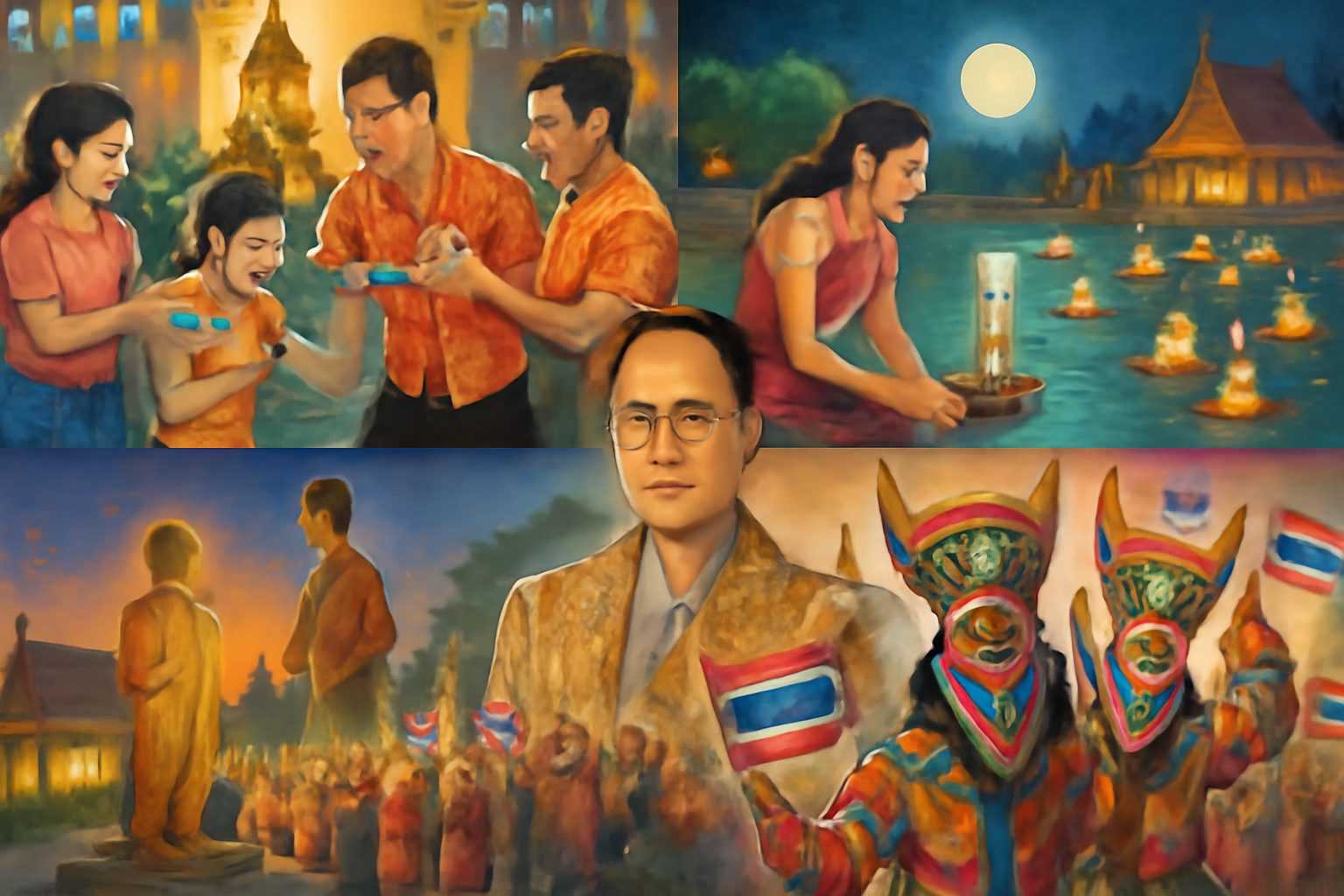
Thailand is a country that boasts a stunning array of festivals throughout the year, each one brimming with history, tradition, and cultural significance. These celebrations serve as an incredible showcase of the Thai people’s devotion to their heritage and beliefs, offering visitors a unique chance to witness the nation’s customs and vibrant way of life.
Among the most famous of Thailand’s festivals is Songkran, the Thai New Year. Celebrated every year in April, Songkran is best known for its epic water fights that take over cities and villages alike. This festival is deeply rooted in ancient traditions where water was seen as a purifier, symbolizing the washing away of bad luck and misfortune. While modern Songkran has become an exciting and fun-filled water battle, it also holds spiritual meaning, as families honor their ancestors and visit temples to make offerings and pour water over Buddha statues for blessings.
Another festival that captures the imagination is Loy Krathong, which takes place on the night of the full moon in November. This festival sees thousands of intricately decorated krathongs—small floating boats made from banana leaves—set adrift on rivers, lakes, and canals. The act of releasing the krathongs into the water is a way to symbolically let go of negativity, and it is believed to bring good fortune. The sight of the glowing krathongs, accompanied by fireworks and traditional music, creates a magical atmosphere throughout Thailand.
For those with an interest in Buddhist traditions, Visakha Bucha Day is a key spiritual event. Celebrated on the full moon of May, it marks the birth, enlightenment, and death of Lord Buddha. This important day is a time for reflection and meditation, with many Thais attending temple services, offering flowers, and participating in candlelit processions. Visakha Bucha Day allows the Thai people to come together in deep reverence for Buddhism’s influence on their culture and way of life.
Phi Ta Khon, or the Ghost Festival, held in the Loei province, is a festival unlike any other. With its vibrant costumes and masks, it’s an event that is filled with energy, humor, and folklore. The festival is rooted in the belief that the spirits of the dead return to the earth, and locals celebrate their return with a joyous and fun-filled procession. The sight of people wearing colorful ghost masks while dancing and singing in the streets is an unforgettable part of Thailand’s cultural calendar.
King Bhumibol’s Birthday on December 5th is a day of great national pride and reverence. The Thai people celebrate their late king’s legacy with ceremonies and tributes, highlighting his long reign and his numerous contributions to the country. On this day, the entire nation expresses its respect for the king through various acts of devotion, such as wearing yellow (the king’s color) and participating in public ceremonies.
These festivals are just a glimpse into the deep cultural traditions that define Thailand. They are moments of reflection, joy, and community, each one offering a unique way to experience and celebrate the nation’s rich history and culture.
