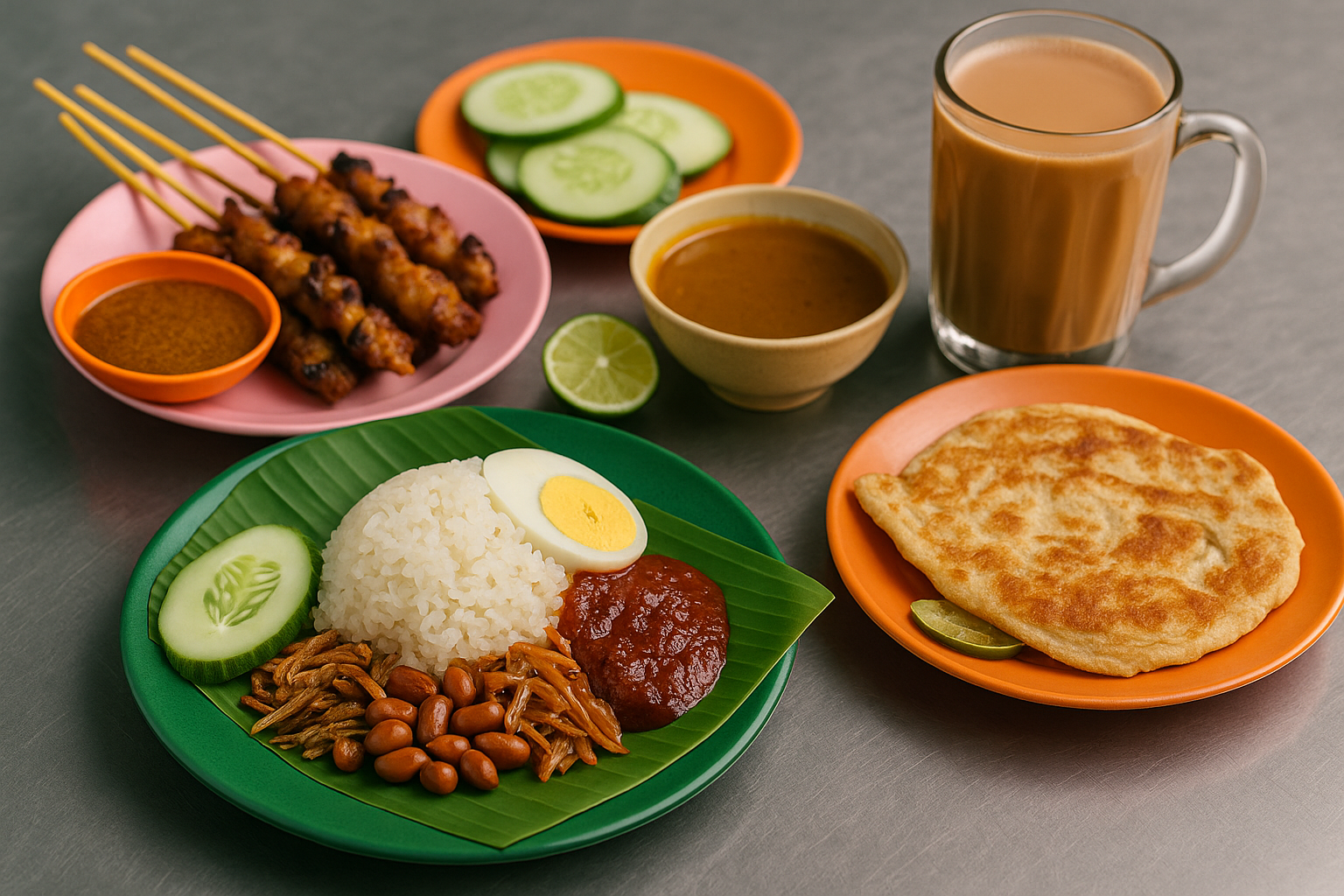
Malaysian cuisine is built on a grammar of ingredients and techniques that yield remarkable complexity. Understanding these building blocks transforms a plate of noodles or a spoonful of curry into a readable text, where each element plays a precise role.
Begin with aromatics. Shallots, garlic, ginger, and chilies form a foundational quartet, often pounded into rempah (spice pastes) with lemongrass, galangal, turmeric, and candlenuts. These pastes are the soul of countless dishes—fried in oil until the raw bite mellows and the kitchen blooms with fragrance, then layered with coconut milk, tamarind, or stock. Bunga kantan (torch ginger) introduces citrus-floral high notes, indispensable in asam laksa.
Coconut is both ingredient and technique. Santan (coconut milk) softens chili heat, enriches curries, and provides velvety body to dishes like nasi lemak and curry laksa. Kerisik—grated coconut toasted and ground—brings nutty depth to rendang. Palm sugar (gula Melaka) contributes a smoky sweetness that rounds bitter and sour notes, shining in desserts like cendol and kuih lapis.
Fermentation adds bass notes. Belacan (fermented shrimp paste) is to Malaysian cooking what anchovies are to Mediterranean cuisine: a tiny dose with outsized umami. Budu, cincalok, and tempoyak (fermented durian) further demonstrate the local love for funk—sparingly used, they electrify salads, sambals, and fish dishes.
Heat management is a signature skill. Wok hei—the elusive “breath of the wok”—requires scorching temperatures and swift movement, seen in char kway teow and Hokkien mee. Deep-frying yields crisp anchovies for nasi lemak and airy keropok. Slow braises—rendang being the icon—coax collagen into silk while reducing sauces until they cling to the meat.
Balance is the guiding principle. Asam (sourness) from tamarind, calamansi, or vinegar keeps rich dishes lively. Fresh herbs—daun kesum (Vietnamese coriander), mint, and coriander—finish with lift. Texture is deliberate: bouncy fishballs against slippery noodles; crunchy peanuts over soft rice; shaved ice sliding into chewy jellies.
Consider a few case studies. Penang asam laksa derives structure from fish stock, acidity from tamarind, perfume from bunga kantan and mint, and heat from chilies—each layer visible, none dominant. Roti canai’s lamination creates flaky strata that soak up dhal without falling apart. Nasi kerabu’s blue hue (from butterfly pea) is more than aesthetics; the heap of raw herbs transforms it into a salad-rice hybrid.
Beverages and sweets complete the lexicon. Teh tarik’s “pulling” cools the tea and aerates it for creaminess. Kopitiam kopi uses robusta beans with butter or margarine roasting, producing a toasty brew. Kuih—bite-sized coconut-and-rice flour confections—prize soft, bouncy, and sticky textures over the crispness beloved in Western baking.
Culturally, halal norms shape ingredient choices and kitchens, ensuring broad inclusivity. Markets and hawker centers keep prices democratic, while home kitchens preserve techniques like pounding rempah by hand. Contemporary chefs reinterpret classics with local produce—sea grapes from Sabah, heirloom rice from Borneo—yet the core grammar remains intact. Learn the language, and the cuisine reveals itself: layered, logical, and irresistibly delicious.
