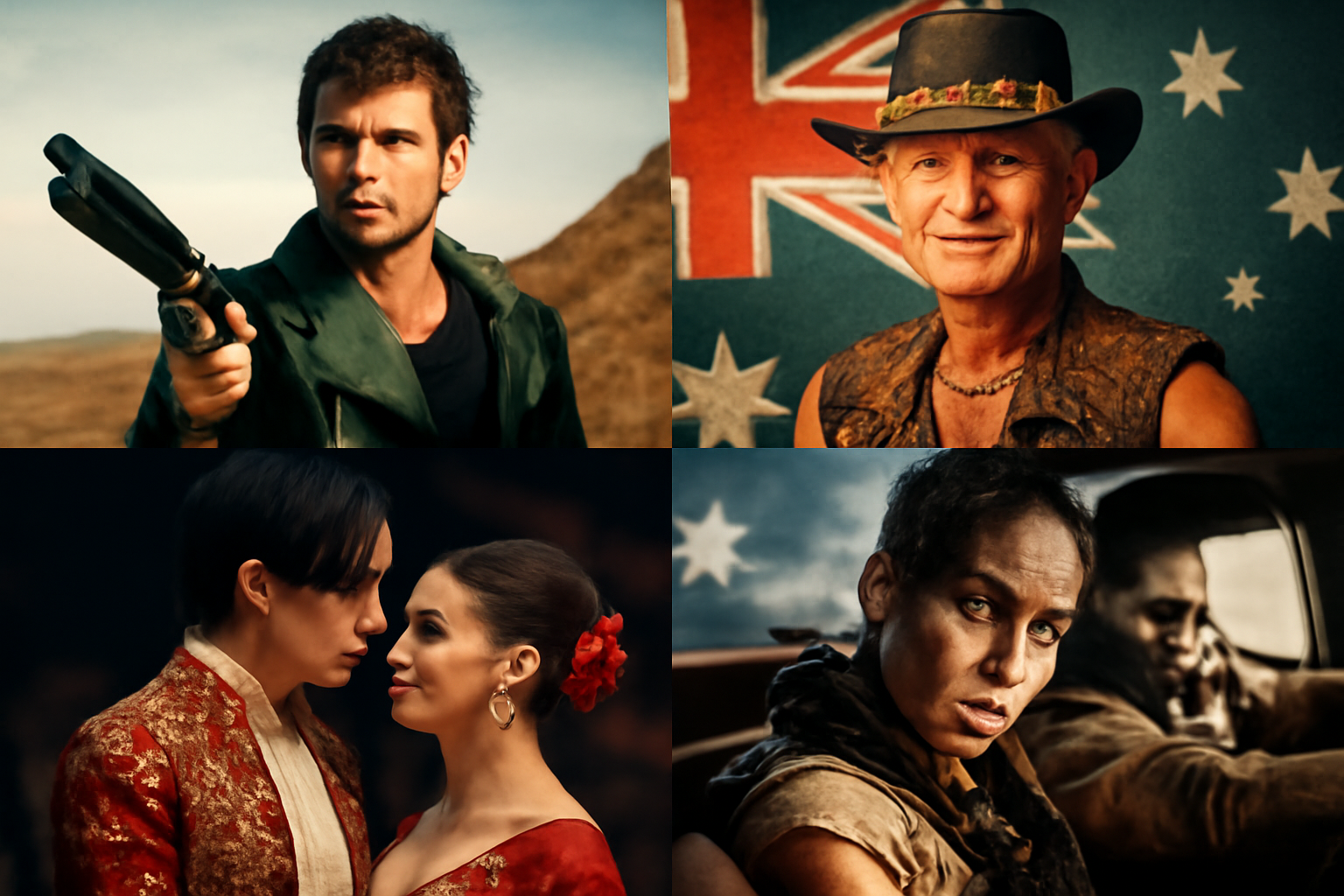
Australia’s film industry has come a long way since the release of Mad Max in 1979. Directed by George Miller, Mad Max is often credited as the catalyst for the global recognition of Australian cinema. The film was a commercial success, gaining worldwide attention for its gritty depiction of a post-apocalyptic world. More importantly, it introduced the world to George Miller and Mel Gibson, both of whom would go on to have successful careers that further elevated Australian filmmaking.
The impact of Mad Max on Australian cinema cannot be overstated. It marked the beginning of a new era for the industry, one in which filmmakers were no longer confined to local markets but were encouraged to think globally. In the years that followed, Australian cinema began to explore different genres, themes, and styles. The 1980s saw an explosion of films that were both commercially successful and critically acclaimed. Crocodile Dundee, released in 1986, became a massive international hit, introducing the world to Australian humor and culture in a lighthearted and accessible way. It wasn’t long before Australian actors and filmmakers started making their mark on Hollywood.
However, Australian cinema is not just about big-budget hits. Directors such as Peter Weir and Gillian Armstrong brought a sense of depth and sophistication to the industry, with films like The Year of Living Dangerously (1982) and My Brilliant Career (1979). These films were notable for their exploration of Australian identity, often delving into complex themes of social and political change.
In the 1990s, Australian cinema saw a further diversification of its offerings. Directors such as Baz Luhrmann, whose Strictly Ballroom (1992) became an instant classic, introduced a more stylized, visual approach to filmmaking. Luhrmann’s success paved the way for his future projects, including Romeo + Juliet (1996) and Moulin Rouge! (2001), which earned him international acclaim.
As the 21st century began, the Australian film industry faced new challenges. However, the industry proved resilient, adapting to the changing landscape of global cinema. The 2000s and 2010s saw the rise of new talent, such as Jennifer Kent, whose The Babadook (2014) was a critical success and solidified Australia’s standing in the horror genre. The release of Mad Max: Fury Road (2015), a visually stunning continuation of the original franchise, marked a high point for Australian cinema, both commercially and artistically.
Today, Australian filmmakers continue to push boundaries, telling stories that resonate on a global scale. With a rich history of creativity, cultural storytelling, and collaboration with Hollywood, Australian cinema remains an essential force in the international film industry.
